To be or not to be?
In the News Series
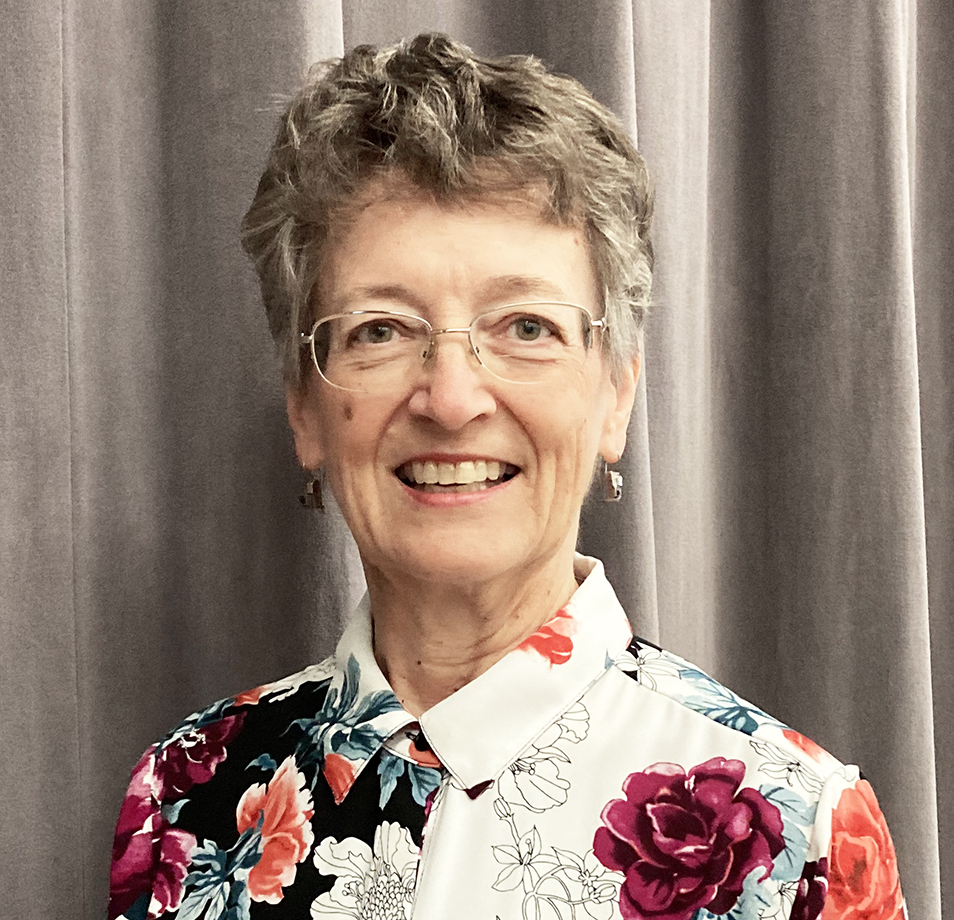
Jewish Family Education with Candace R. Kwiatek, The Dayton Jewish Observer
‘Death by doctor’ goes global in 2026. Canada set to surpass 100,000 assisted suicides — more than the country’s WWII death toll. Assisted Dying Rises Over Time in States With Oldest ‘Medical Aid in Dying’ Laws. New Yorkers issued stark warning about opening ‘Pandora’s box’ of doctor-assisted suicide: ‘Like a holocaust’. Euthanasia of the Mentally Ill Increasing in the Netherlands. Veteran encouraged to end his own life ‘with government assistance’? ‘Untold damage’: Global assisted suicide movement targets children: From Canada to Europe, a powerful lobby is pushing to let ‘mature minors’ choose death by euthanasia.
Today, more than 400 million people — stretching from the Americas to New Zealand — live in jurisdictions where assisted death is legal.
Often termed physician-assisted dying (PAD), medical aid in dying (MAiD), or “Death with Dignity,” the practice is gaining significant momentum in the United States.
While currently legal in 13 states and Washington, D.C., 17 more states are considering similar legislation this session.
What was once a rare exception is transitioning into a standard medical option. This shift reflects a move away from traditional “sanctity of life” and “do no harm” frameworks toward a contemporary focus on quality of life and personal autonomy.
Its central principle is self-determination, the assertion that a competent individual should have the right to choose the timing and manner of their own death.
As assisted dying becomes more commonplace and integrated into health care, however, critics warn of a transition toward “socio-economic utility”— where an individual’s value is weighed against their cost to society.
This utilitarian approach risks fostering a “duty to die” among vulnerable populations, such as the disabled or impoverished, to alleviate burdens on family or society.
Furthermore, viewing humans through the lens of utility inevitably influences how we perceive others and ourselves.
This perspective challenges a foundational tenet of Western ethics expressed by philosopher Immanuel Kant, that “Human beings are ‘ends-in-themselves.’ They and only they have dignity; they have no price.”
Assisted dying is rare in Jewish tradition, though not entirely unknown.
For example, the Tanakh (Hebrew Bible) recounts Saul requesting death to avoid capture by the Philistines, and King David later executing the soldier who claimed to have complied.
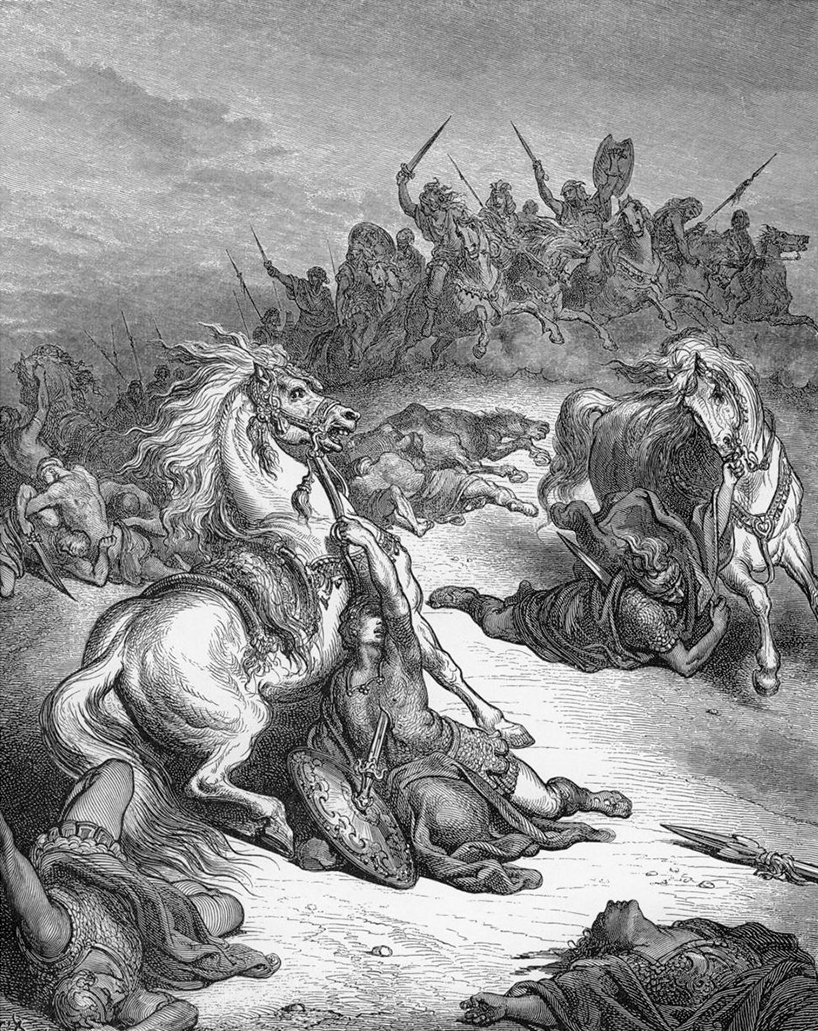
Similarly, the historian Josephus describes the last holdouts on Masada drawing lots to kill each other rather than face Roman enslavement.
Neither text, however, is viewed as justification for supporting modern assisted dying; in fact, they suggest the exact opposite.
Under Jewish law, actively ending a life or assisting in doing so is generally forbidden and equated to murder.
Consequently, physician-assisted dying is, as a rule, prohibited by all of Judaism’s major denominations. This position is anchored in four fundamental ideas: sanctity, uniqueness, value, and purpose.
Sanctity. A gift from God created in the image of God, human life is intrinsically set apart from the rest of Creation, the Torah teaches. Every human being is endowed with infinite dignity — an inherent birthright nobility of sacred worth, significance, and equality — regardless of one’s actions, merit, or status.
And just as God is holy, every person can cultivate and reflect that divine holiness —compassion, justice, righteousness — through their presence, words, and deeds, becoming God’s mirrors and partners in the world.
Uniqueness. “A human being mints many coins from the same mold and they are all identical,” the Talmud observes. “But the Holy One, Blessed be God, strikes us all from the mold of the first human, and each one of us is unique.”
Every human since the beginning of time has been one-of-a-kind, and given a unique purpose in this world that cannot be done by anyone else.
Value. Judaism places the highest value on human life, the core principle known as pikuach nefesh.
The scholars of the Talmud underscore this by pointing out that Adam was created alone, teaching that whoever takes a human life is considered to have destroyed an entire world, while whoever saves a human life is considered as if they preserved an entire world.
There are no qualifiers — young or old, productive or infirm. Just as the broken tablets were placed in the Holy Ark alongside the second, intact set of tablets, life has inestimable value, regardless of its relative quality or usefulness, and this sanctity of life takes precedence over almost all other religious commandments.
Purpose. Beyond the sanctity of life itself, every moment has inherent value and purpose, even if we don’t always see the full picture. As philanthropist John Templeton wrote, “Each of us has a purpose for living beyond our own survival and pleasure…like a thread in a beautiful tapestry with a vital contribution to make…”
Life is not our personal property; it is entrusted on loan to each of us. Every moment, every breath on earth has purpose, beyond what we can fathom. As long as we are here on earth, it is because God has decided we still have a mission to accomplish.
We may not know what our mission is — but we can be sure it’s there. Ultimately, life belongs to God, who decides when our purpose has been fulfilled, and when it is to end.
While Hamlet famously pondered whether it is nobler to endure life’s hardships or to end them in the immortal words, “To be or not to be,” Judaism explicitly chooses “to be,” insisting that no one has the right to take a life, yet commanding that no one artificially delay its natural departure.
Judaism says this best in the immortal words, l’chaim — to life!
Literature to share
Through the Language Glass: Why the World Looks Different in Other Languages by Guy Deutscher. Why did the ancient Greek poet Homer never use the word blue? How does grammar reflect social structure? Can gendered nouns for bridge, like the German die brücke (f) and el puente (m), affect how each culture describes a bridge? Unexpectedly fascinating, this is a serious but easily readable exploration of how language impacts our experiences of the world.
Choices We Make by Michelle Gabriel. How do you make good choices or decisions when you’re just a kindergartener? Sometimes you need practice! With a rhyming cadence and colorful illustrations, each of the short tales in this volume offers just that for preschool and early primary grades. Perfect for family or class discussion, they offer an opportunity to explore choices and discover how decisions affect others.
To read the complete May 2026 Dayton Jewish Observer, click here.