
‘Let my people go’
America 250 — Part Three
In the news series
Jewish Family Education with Candace R. Kwiatek, The Dayton Jewish Observer
The Hidden Jewish History Inside the American Revolution. How a Tiny Jewish Island Community Helped Win the American Revolution. The Jew Who Financed the American Revolution. The Forgotten Fighters: Jewish Soldiers of the American Revolution. The Maccabees of the American Revolution.
Ask ordinary people to describe Jewish culture, and they will likely name traits like family-oriented, well-educated, charitable, or resilient. Revolutionary is unlikely to make the list.
Yet this mainstream perspective overlooks a heritage of sweeping transformation driven by four major liberation movements in Jewish history.
Each arose from a unique existential threat: ancient enslavement, forced religious and cultural erasure, the systemic denial of human rights, and industrial annihilation triggered by modern antisemitism. These watershed moments profoundly reshaped both Judaism and world history.
The first revolution was biblical — a dual triumph that began with the momentous Exodus from Egypt that established history’s foundational narrative of liberation from tyranny. It culminated at Sinai, where radical concepts of ethical monotheism, human responsibility, and equality under the law sparked a moral shift that reshaped human civilization.
In the second century B.C.E., the Maccabean revolt erupted when Judea’s beleaguered Jewish community took up arms. The rebels initially seized Jerusalem to purify the Holy Temple and restore traditional worship, which became a catalyst for ultimately overthrowing Seleucid rule.
Beyond these victories, the uprising dismantled the entrenched aristocracy to forge a sovereign, populist-led kingdom that eventually expanded into a powerful regional empire.
Long before the modern Zionist movement reestablished a sovereign nation in the Jewish ancestral homeland, that same revolutionary impulse targeted British tyranny across the Atlantic. In the American Revolution, early Jewish communities found a cause that merged their ancient yearning for liberty with the birth of a new nation. When America’s colonists framed their resistance as a divine duty to escape a modern “pharaonic” bondage, American Jews recognized their own foundational values in action. Eager to be included as full, equal partners in a new society, Jewish patriots stepped forward, risking their lives and fortunes for American independence.
On the eve of the American Revolution, roughly 2,500 Jewish people lived in the colonies, just 0.1% of the population. Over half resided in key port cities (New York, Philadelphia, Newport, Savannah, and Charleston), working as international merchants, local shopkeepers, and artisans, professions that transitioned easily into wartime roles.
While written records are limited, individual biographical vignettes reveal this tiny community’s wide-ranging impact on American independence.
The rebellion. In 1765, over 400 Philadelphia merchants boycotted British imports to protest the Stamp Act. According to historian Jerry Klinger, prominent merchant Mathias Bush was the first to step forward to sign the official resolution, one of nine Jewish signatories to the document.
Patriot forces. Barred from military service throughout much of history, early Jewish Americans made especially notable contributions to the Revolution. In 1774, South Carolina’s Francis Salvador became the first practicing Jew elected to a colonial legislative assembly.
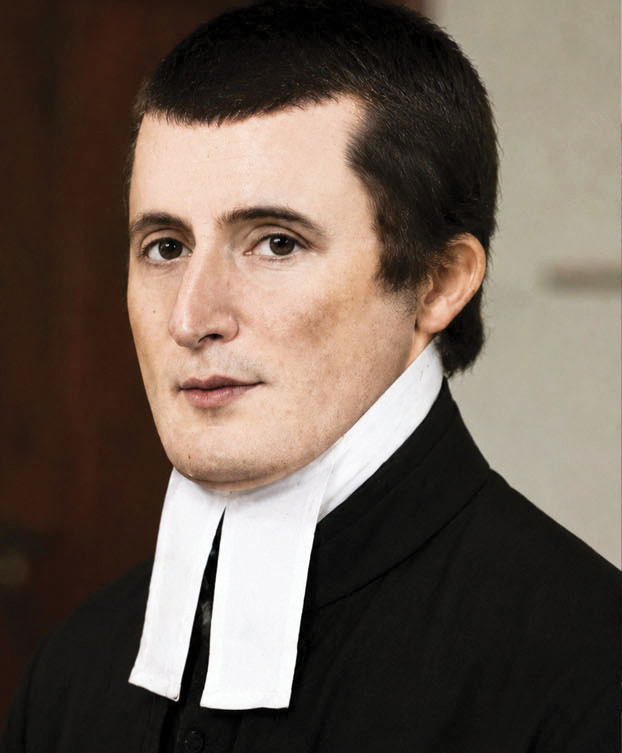
Equally dedicated on the battlefield, Salvador famously rode through the night to rally a militia against British-allied Cherokee forces raiding frontier settlements. One month later, he was killed in an ambush, becoming the war’s first Jewish casualty.
At the Battle of Bunker Hill, Aaron Solomon fought in the front rank alongside non-Jews. During the harsh winter at Valley Forge, Abraham Levy and Phillip Russell stood watch—protecting the army and the nearby Continental Congress.
In South Carolina, Manuel Mordecai Noah fought under Gen. George Washington and donated substantial personal funds to the revolutionary cause.
Jewish officers also provided critical leadership and logistical support. Mordecai Sheftall rose from privateer to colonel, becoming the highest-ranking Jewish officer in the Continental Army. Managing vital logistics in the South, Sheftall used his own money and credit to feed and equip troops when government funds failed.
In the North, Lieut. Col. Solomon Bush served honorably in the Pennsylvania Militia. After being wounded and captured, Bush exposed a British spy operating inside Washington’s headquarters.
The supporters. While 100 to 150 Jews saw active combat, many more supported the American Revolution through finance, logistics, even spycraft.
Early in the conflict, the British arrested Haym Salomon for espionage and forced him to act as an interpreter — a role he used to gather intelligence, assist prisoner escapes, and encourage Hessian desertions.
Salomon later became a successful merchant and a primary financier of the war, securing roughly $650,000 — nearly $20 million today — in European loans and personal advances.
Meanwhile, Joseph Simon, a prominent Lancaster merchant, partnered with colonial gunsmith William Henry. Through this relationship, Simon supplied the military with vital munitions, including the highly accurate Pennsylvania flintlock rifle.
Gershom Mendes Seixas, known as the “Patriot Chazan (cantor),” championed the American cause from the pulpit. Although he detested war, he saw the struggle for liberty as a just cause, and he regularly used his sermons to pray for the success of Congress, the Revolution, and Washington.
Supply chain. During the American Revolution, the tiny Dutch island of Sint Eustatius became a vital international trade hub. Its large, thriving Jewish merchant community leveraged extensive transatlantic family networks to coordinate complex wartime logistics. By bypassing British blockades, these merchants smuggled critical military assets — including firearms and gunpowder — from Europe, directly sustaining the American war effort.
The impact of this maritime route was so profound that British Adm. George Rodney later remarked, “Had it not been for…this infamous island, the American Rebellion could not possibly have subsisted.”
Both the Exodus and the American Revolution began with the demand, variously expressed, to “Let my people go!”
In Exodus, the call was not just to escape from Pharaoh, but a summons to a higher purpose: a voluntary covenant to serve God. Similarly, historian Adam Jortner notes in A Promised Land, American Jews during the Revolution also fought — not to flee persecution, but for something greater. They sought liberty, civic rights, and a new republic.
How these dual concepts of spiritual covenant and political liberty fused into the nation’s blueprints is the focus of the final article in this series.
Next month: The nation’s blueprints
Literature to share
The Great Kosher Meat War of 1902: Immigrant Housewives and the Riots That Shook New York City by Scott D. Seligman. Outraged by a sudden 50% hike in kosher meat prices, thousands of working-class Jewish housewives on Manhattan’s Lower East Side boycotted neighborhood butchers only to discover the true culprits: the powerful Chicago-based “Beef Trust” cartel. Well-researched, this award-winner balances both sides of the dispute, and the incredible moment everyday citizens discovered their collective consumer power.
The Peddler and the President by Ann D. Koffsky. An award-winning early chapter book for elementary ages, this biography explores the unlikely friendship between future U.S. President Harry S. Truman and Jewish salesman Eddie Jacobson. Its traces how their deep, lifelong bond directly influenced the founding of the State of Israel in 1948. A unique intersection of American, Israeli, and Jewish history, it highlights themes of loyalty and moral courage. An excellent online reading guide by the author is available at the Ann Koffsky Book Page.
To read the complete September 2026 Dayton Jewish Observer, click here.