
Three known Civil War veterans are buried in our Jewish cemeteries. Here are their stories.
By Marshall Weiss, The Dayton Jewish Observer
One fought at the Battle of Antietam. Another was an orderly and then worked in the U.S. Telegraph Office at Cumberland Gap. A third defended Cincinnati against the threat of a Confederate invasion.
One went on to live a long life surrounded by prosperity and family, and made significant contributions to the betterment of his community. The other two suffered debilitating injuries and relied on Dayton’s National Soldiers Home and its hospital, where each convalesced and died.
One has three gravestones. Another has none.
They are the three known Jewish Civil War veterans buried in the Dayton area’s Jewish cemeteries. All were with Union forces. As The Observer’s contribution to America 250, here are their stories.
Isaac Pollack: Squirrel Hunter
Jewish immigration to the United States in the mid-1800s was mainly from central Europe in response to antisemitism and the economic and political upheaval in German states surrounding a spate of unsuccessful revolutions.
Isaac Pollack was born in 1836 in Riedseltz, part of France’s Alsace region, which alternated between German and French rule. He arrived in the United States as a teenager in 1851.
Eight years later, he and Bavarian Jew Sol Rauh began selling wholesale wines, liquors, brandies, and cigars at Third and Kenton Streets in Dayton.
When Ohio’s governor urged all able-bodied men to report to Cincinnati to defend it against a possible Confederate invasion in September 1862, Pollack was among the 15,000 civilian volunteers to join the militia. It would become known as the Squirrel Hunters. Pollack enlisted with the rank of 5th corporal in Company B, 1st Regiment.
The men were sent home when the threat subsided, about two weeks later. Pollack’s discharge papers are yet to be found. In later life, he was frequently referred to in Dayton society as “Col. Pollack.”
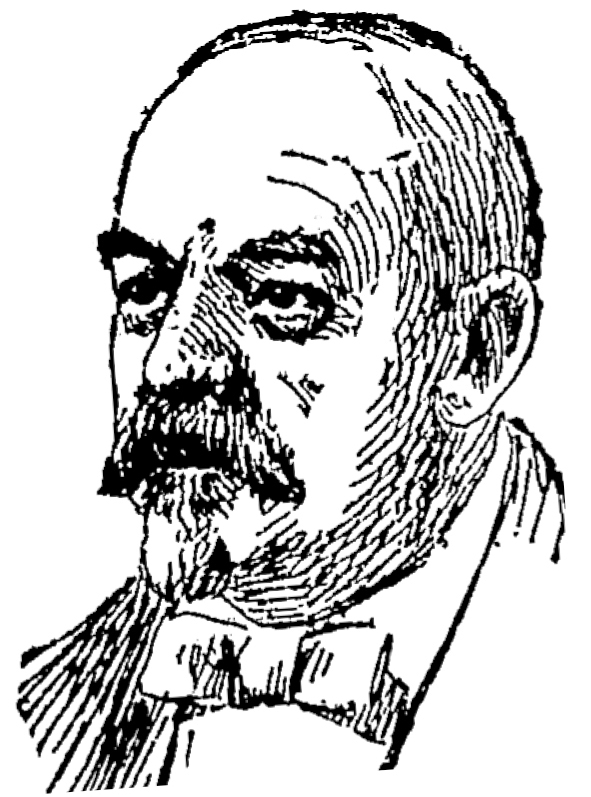
Adeline Pollack, his widow, shared her recollections of that time period with The Dayton Daily News on her 90th birthday in 1933.
She met him on a visit to Dayton from her home in Baltimore. A year later, he proposed.
Members of Pollack’s militia regiment happened to be in Baltimore when he married her there on May 24, 1864.
“What did my husband do but invite six of them to attend, and they all showed up with uniforms, spick and span,” Adeline Pollack recalled.
Isaac Pollack then brought his wife to live in Dayton.
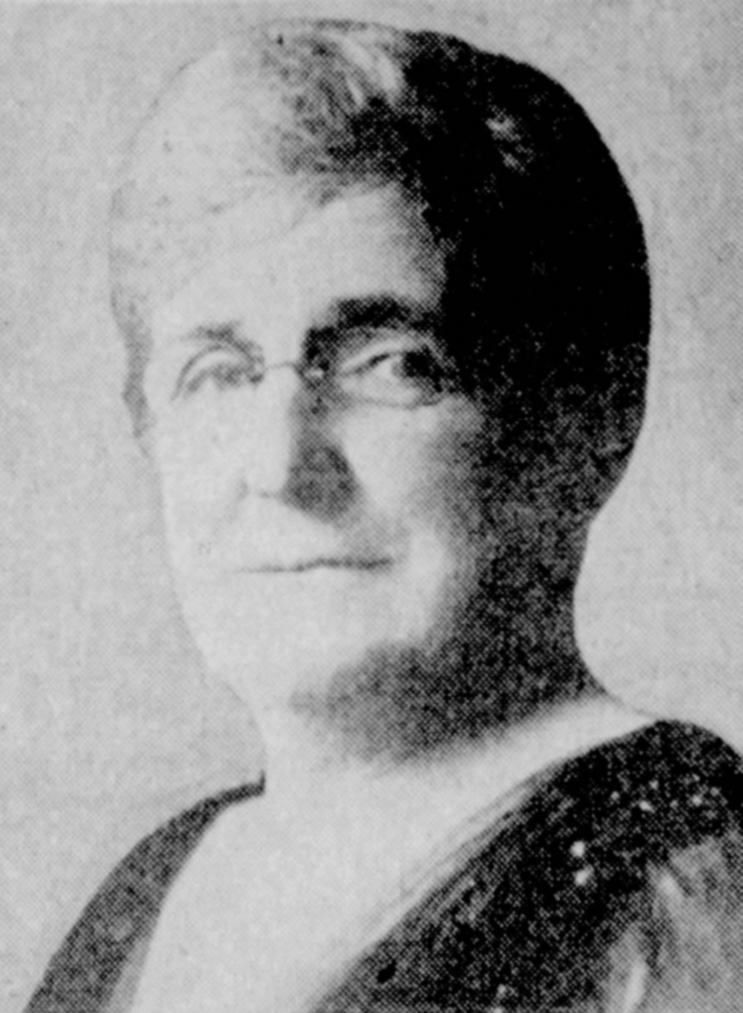
“When he fell in love with and proposed to me, he decided that he had to give all his time to me and to his business,” she said. “So when his regiment was called to war, he paid a substitute to go to war in his place. That was possible in those days and many men with families did the same thing.”
Not only did Pollack and Rauh prosper in the wholesale liquor business, the close friends built identical mansions next door to each other in 1876: at 319 and 321 W. Third St. in Dayton.
Adeline Pollack remembered that “after Isaac Pollack and Sol Rauh bought the ground on which they built their homes, they drew lots to determine on which side of the lot each was to build. When the houses were completed, they were often referred to as ‘show places’ of the city.”
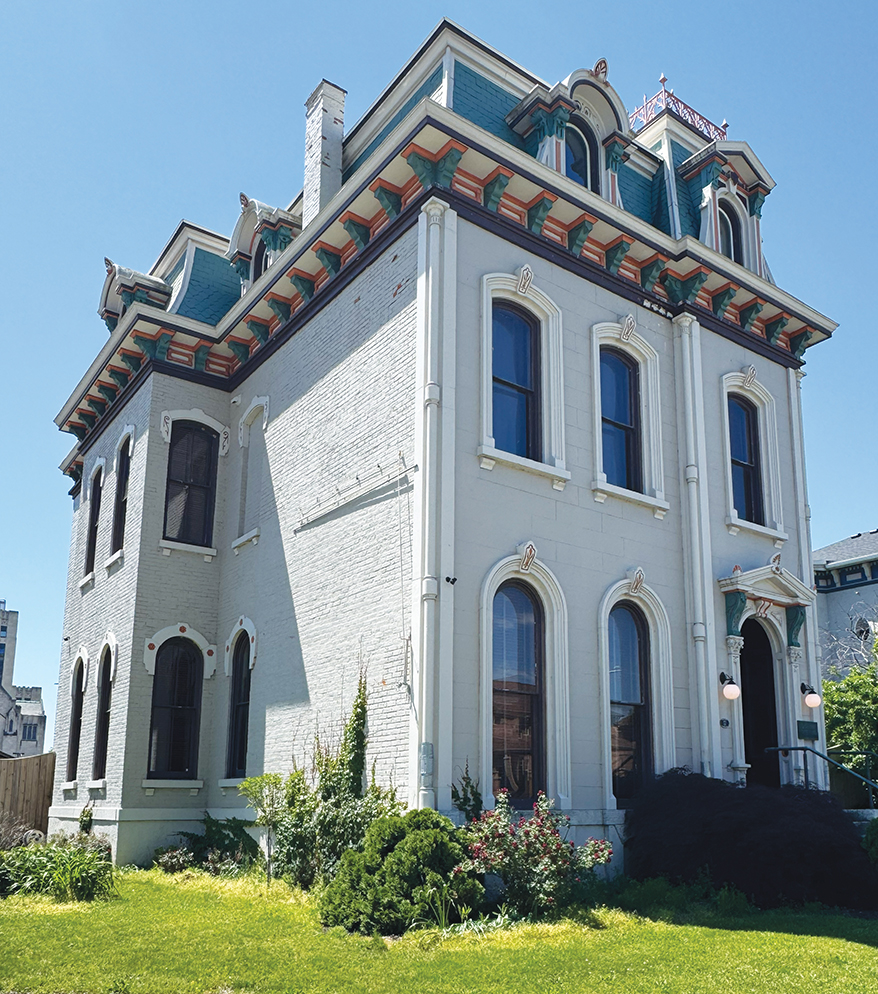
The Pollack house stands today, though at a different location. In 1979, it was moved to 208 W. Monument Ave.
When Isaac Pollack died at age 72 in 1908, he was remembered for his philanthropy and activism in the Jewish and general communities. He had served as president of Dayton’s Reform congregation, B’nai Yeshurun (now Temple Israel), was a founding member and president of Dayton’s B’nai B’rith lodge, and a longtime Mason.
He was also a founding member of the Standard Club, the social and literary club for Dayton’s German Jews — effectively an extension of B’nai Yeshurun, and a major donor to St. Elizabeth’s Hospital when it was established.
A staunch Democrat, Pollack served as grand marshal at the funeral of Dayton’s former Copperhead Congressman Clement Vallandigham in 1871.
David Rothchild: Wounded at Antietam
Born in the Grand Duchy of Hesse in 1826, David Rothchild made a living as a butcher in Dayton. He and his wife, Rosalia, lived at 40 St. Clair St.
Rothchild enlisted in the 11th Ohio Infantry, Company A, in Dayton, May 25, 1861.
At the Battle of Antietam, Sept. 17, 1862, an explosion impaired his vision and disfigured both of his feet. He was honorably discharged as incapable of performing the duties of a soldier from a Washington, D.C. military hospital on Oct. 29, 1862.
Rothchild returned to his wife in Dayton.
Along with a sense of duty and a steady income, another incentive for immigrants to the United States to enlist with Union forces was a faster track toward naturalization.
This may have contributed to Rothchild’s naturalization in Montgomery County Probate Court, Oct. 8, 1863.
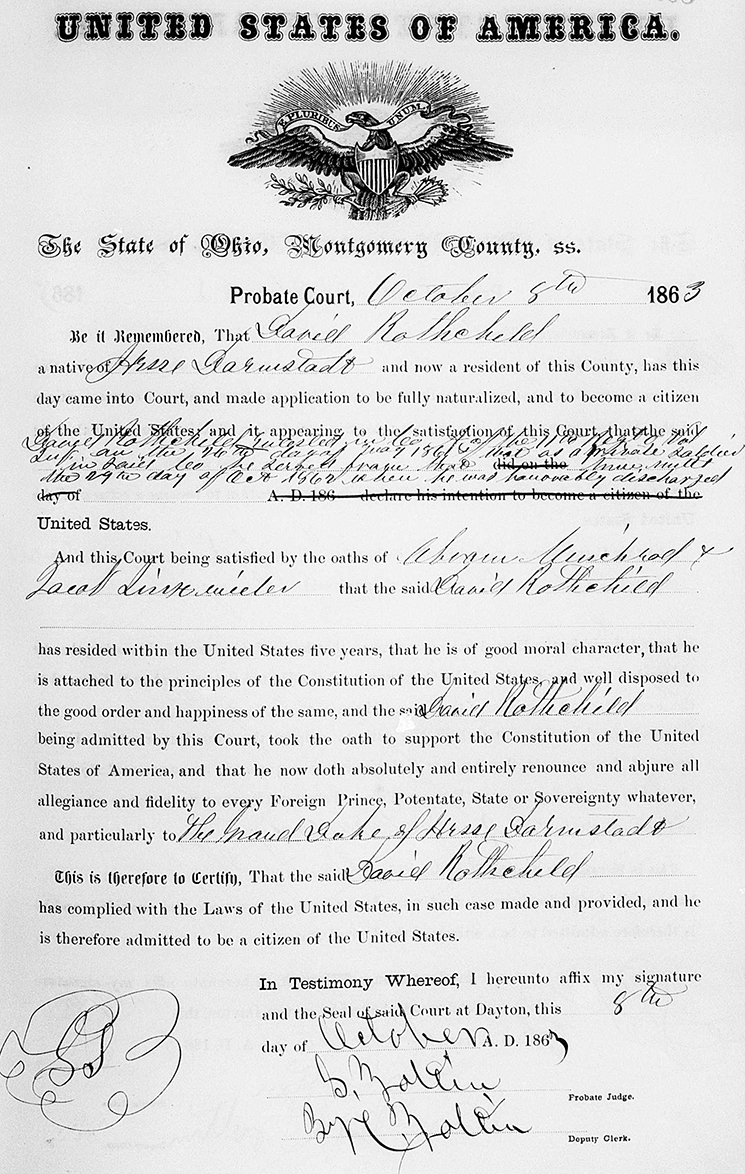
In 1864, Dayton’s city directory listed him as a sawyer. Two years later, he was a butcher once again.
It didn’t last long. He was admitted to the Dayton National Home for Disabled Volunteer Soldiers in September 1868, a year after the facility opened.
In 1874, a notary documented on a government form (to increase his military pension) that Rothchild’s “diseased eyes…has so increased that it is almost impossible for him to get along without assistance of others. Sight has become so weak that glasses have become useless; he is totally unfitted for any kind of manual labor.”
He died of paralysis in the Soldiers Home hospital, Dec. 6, 1875 at age 48.
Simon Oberdorfer: Injured as an orderly
On Memorial Day 1923 — Wednesday, May 30 — a brief article ran in The Dayton Herald without a byline, as was usual in those days:
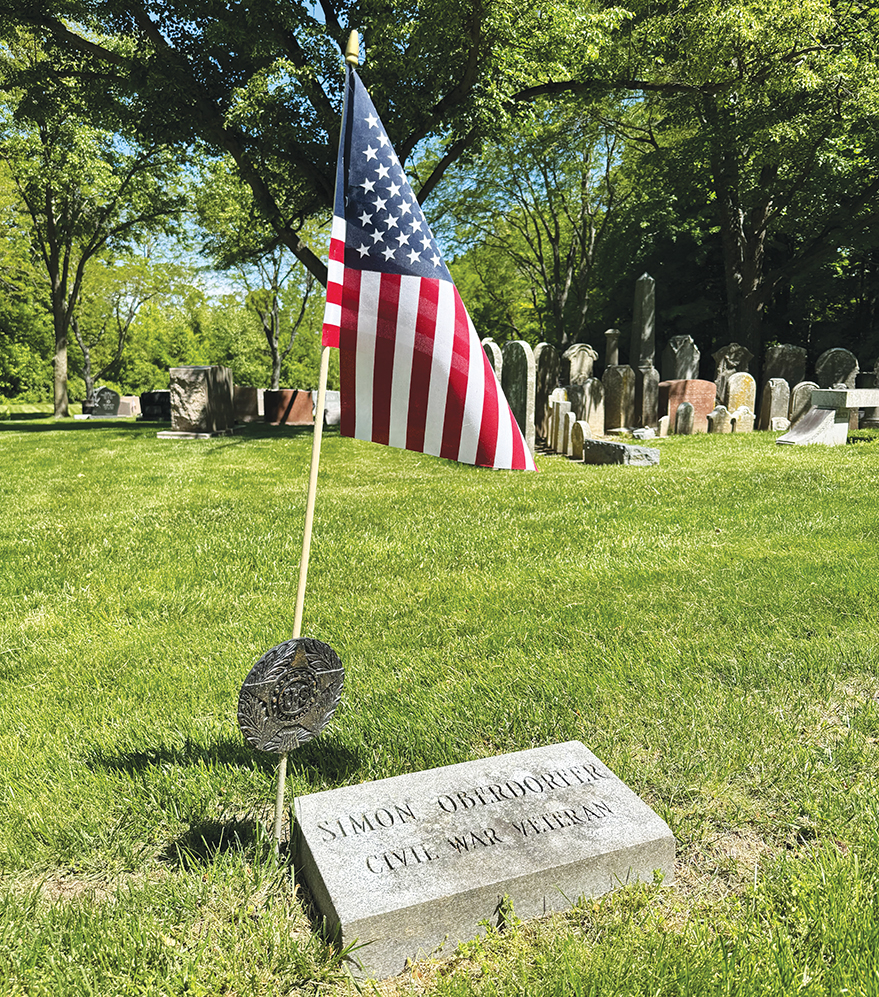
“When peans are sung Wednesday and the glorious deeds of fallen heroes are told in the various cemeteries of Dayton, there will be one cemetery in the city where no service is scheduled, where one soldier’s grave will not be visited. This soldier in his day was known to his fellow men as Simon Oberdorfer. He fought with Lincoln’s troops as a member of Company A, 34th Kentucky Infantry. How his body comes to rest in an abandoned Jewish cemetery at Rubicon Road and Stewart Street is a mystery hidden in the folding pages of time. Even the name of the cemetery has been forgotten…Stranger hands Wednesday placed an American flag on the grave.”
With the advent of technologies unimaginable a century ago, answers are easier to find and verify now.
The unknown writer was referring to Temple Israel’s old cemetery, Dayton’s first Jewish cemetery, which opened in 1851.
Today’s Temple Israel members might be surprised to learn the old cemetery did have a name: Beth Hayim, Hebrew for House of Life or House of Living.
Temple Israel’s current cemetery, Riverview, opened in 1889. Beth Hayim cemetery hadn’t been abandoned; it was out of use. Three generations of caregivers — grandfather Charles, son Otto, and grandson Elmer Peckolt — served as Beth Hayim’s caretakers from 1875 to 1961.
What we know about Simon Oberdorfer, born in Württemberg in 1842, dates to 1855 in Louisville, Ky.
In March that year, the Louisville Evening Bulletin and The Louisville Daily Courier ran city court reports that Oberdorfer was fined for selling liquor on March 18, “that being the Christian Sabbath day.”
“The trial was entered upon, and it was proven that prior to last Saturday, Oberdorfer, though an Israelite, had never in good faith observed the Jewish Sabbath, his recent conversion being so that he might avail himself of the profits of the Sunday liquor traffic when the Gentiles could not sell,” The Louisville Daily Courier reported.
A week later, the newspaper reported the case was disposed of, “the jury assessing his fine at $75 and costs, equal to a sum that will about use up the profits of his Sabbath bar,” and that the board of aldermen had passed a resolution refusing to grant Oberdorfer a tavern license, “because he shapes his religious creed to suit the exigency of the times.”
He found work as a tailor instead. Oberdorfer enlisted with the Union Army in Louisville. While he was assigned as an orderly in May 1864 to brigade headquarters at Cumberland Gap, Tenn., he suffered from a hernia in Bowling Green, Ky. He was then assigned to the Cumberland Gap U.S. Telegraph Office, where he worked for four months. Oberdorfer was honorably discharged in Knoxville, Tenn. with the end of the war, on June 24, 1865. He also served in Company E, 2nd U.S. Infantry after the war. He worked as a waiter and never married.
He was first admitted to the Dayton National Soldiers Home Jan. 28 to March 1, 1869. From Jan. 13 to April 12, 1871, he was under treatment at a government insane asylum in Washington, D.C. Oberdorfer’s final admittance to the Dayton Soldiers Home was Nov. 3, 1876. He died there April 9, 1877 due to inflammation of the bowels, between 34 and 35 years old.
The Soldiers Home
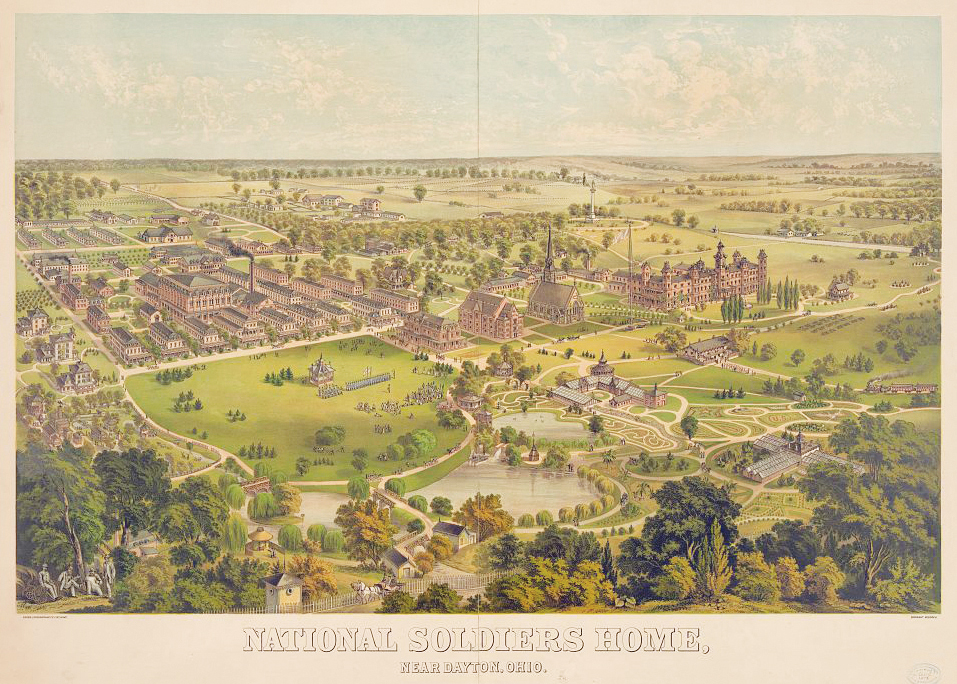
Signed into being by Abraham Lincoln in March 1865, Dayton’s National Soldiers Home — now the Dayton VA Medical Center — was among the first three facilities to care for discharged Union army and navy veterans. Its greenery and amenities appealed to Dayton-area residents, who used it for their own recreation.
“After the Soldiers Home was established in Dayton, near the beginning of the 1870s, we found a lot of pleasure in going out there,” Isaac Pollack’s widow, Adeline, remembered in her 90th birthday Dayton Daily News interview. “The Soldiers Home used to present excellent stock companies in its Memorial Hall every summer, and it was customary for us to attend these performances every week and to take our children.”
Where they’re buried
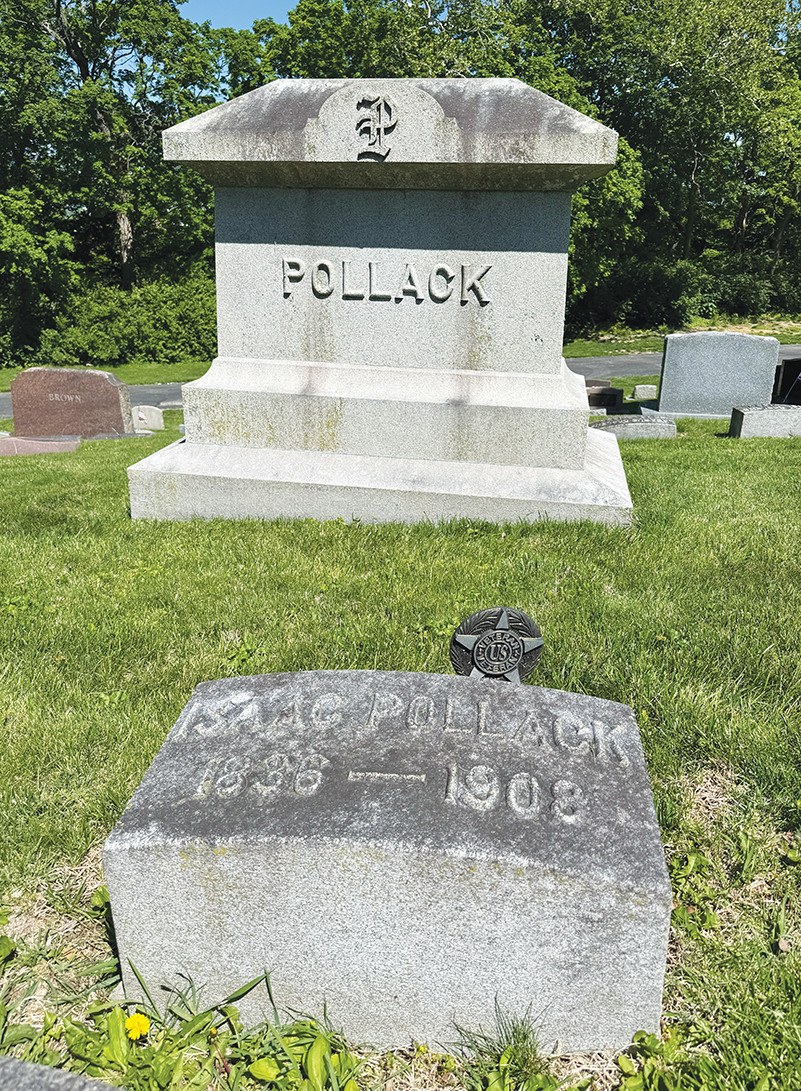
Adeline Pollack died in 1940. She and Isaac Pollack are buried in the Pollack family plot at Temple Israel’s Riverview Cemetery.
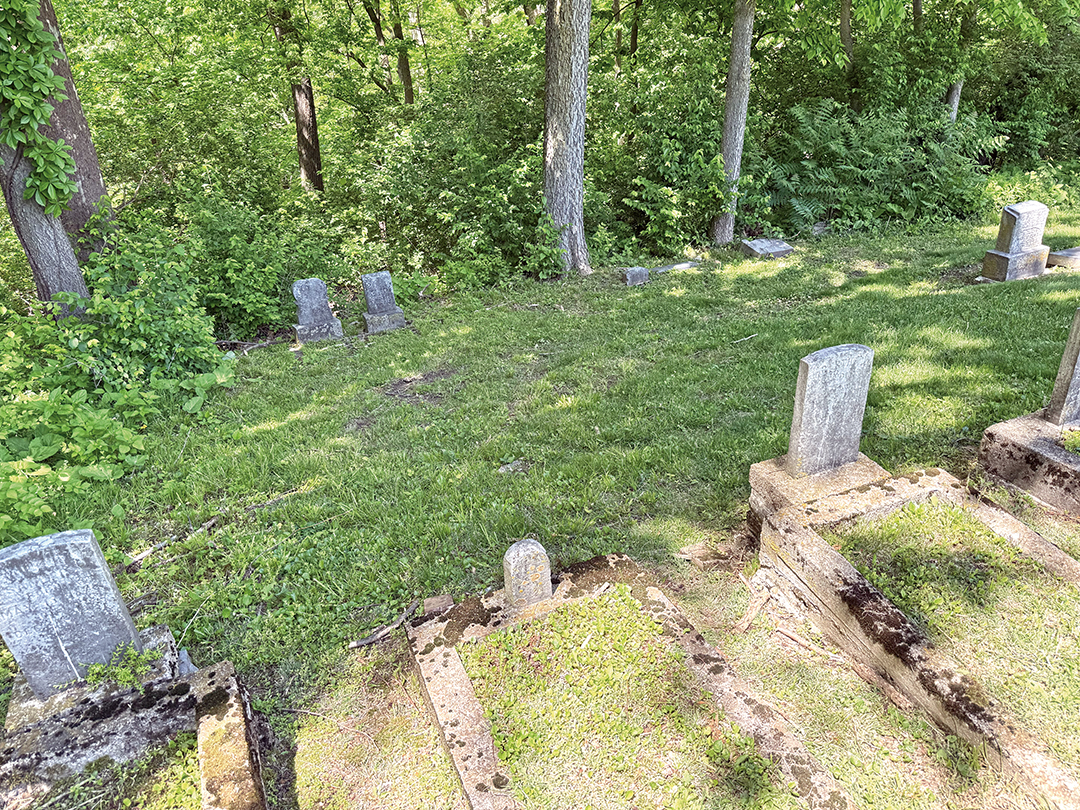
Soldiers Home records indicate that when David Rothchild died, Dec. 6, 1875, his body was “taken to Dayton by his friends” at 10 p.m. According to the Montgomery County Recorder’s Veterans Grave Index, Rothchild was buried at Beth Jacob Cemetery, Dec. 8, 1875.
The founders of Beth Jacob Congregation purchased the land for their cemetery Nov. 23, 1875; it’s likely Rothchild was the first person to be buried there.
The congregation itself has no record of his burial. If there was a grave marker for David Rothchild in Beth Jacob Cemetery, it’s no longer there.
His wife, Rosalia Rothchild, would be buried at Baltimore’s Hebrew Friendship Cemetery after her death in 1896. She had moved to Baltimore to be near their adult children.
Adding to confusion about where David Rothchild is buried, someone posted at the Find A Grave website that he was interred at Beth Abraham Cemetery — but that cemetery didn’t open until 1894.
Confusion also surrounds the final resting place of Simon Oberdorfer. His remains were among the last 63 bodies to be disinterred from Temple Israel’s old cemetery and reinterred at Riverview Cemetery in May 1967.
The 63 were reinterred in what Temple Israel calls its Founders Circle, with new gravestones above each burial and the old gravestones arranged together in a semicircle at the rear of the section.
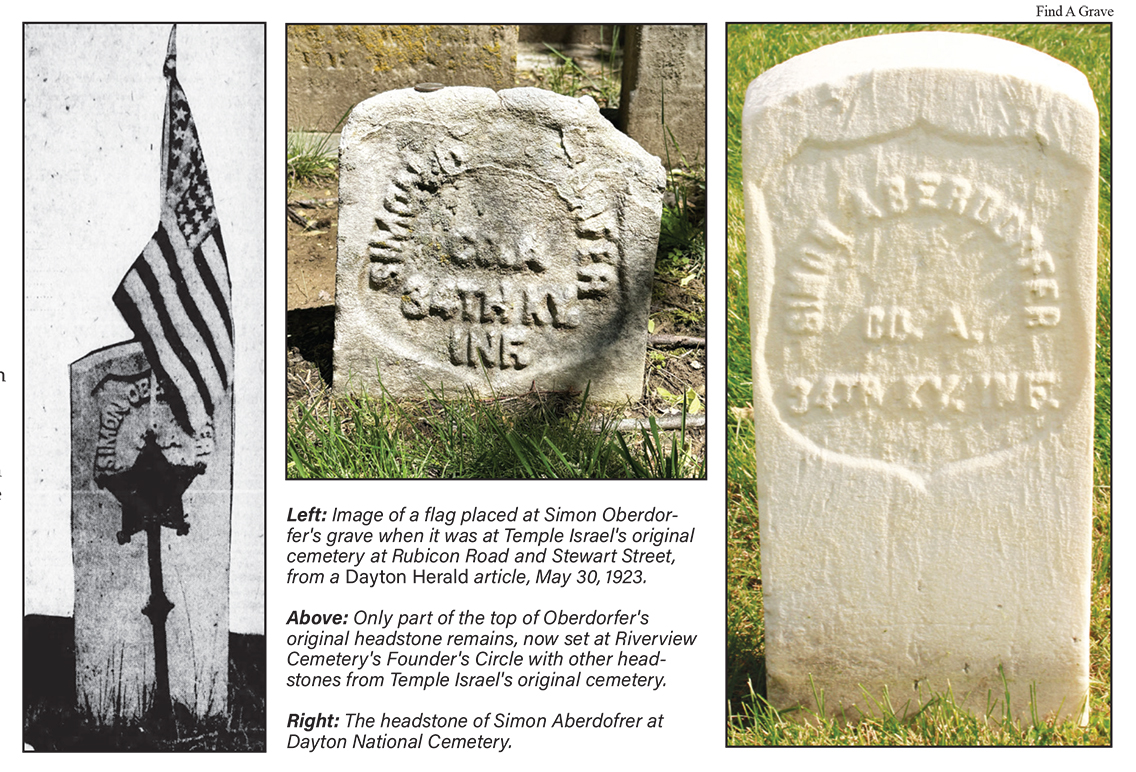
It turns out there is also a gravestone at Dayton National Cemetery for Oberdorfer, but spelled with an A: Aberdorfer. Temple Israel Administrative Assistant Ellen Finke-McCarthy has pieced together records of two burials for Oberdorfer: April 9, 1877 at Dayton National Cemetery and April 11, 1877 at the old Temple Israel cemetery, Beth Hayim.
With knowledge that in 1967, Temple Israel’s cemetery committee placed new gravestones in the Founders Circle only over actual remains recovered from the old cemetery, it’s likely that Oberdorfer is buried at Riverview. We’ll let you know what we find.
And we’ve already identified eight Jewish Civil War veterans buried at Dayton National Cemetery. Look for a feature on those veterans later this year.
Marshall Weiss is founding editor and publisher of The Dayton Jewish Observer and project director of Miami Valley Jewish Genealogy & History, a program of the Jewish Federation of Greater Dayton.
Related: 7 (possibly 8) Jewish Civil War veterans are buried at Dayton National Cemetery.
Related: Jews & the Civil War integral to Piqua’s history.
To read the complete June 2026 Dayton Jewish Observer, click here.