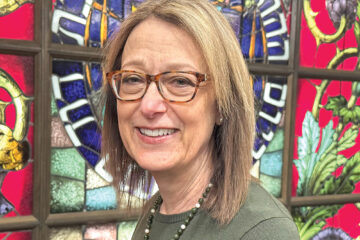
Being Jewish podcaster Jonah Platt to keynote Jewish Federation Presidents Dinner
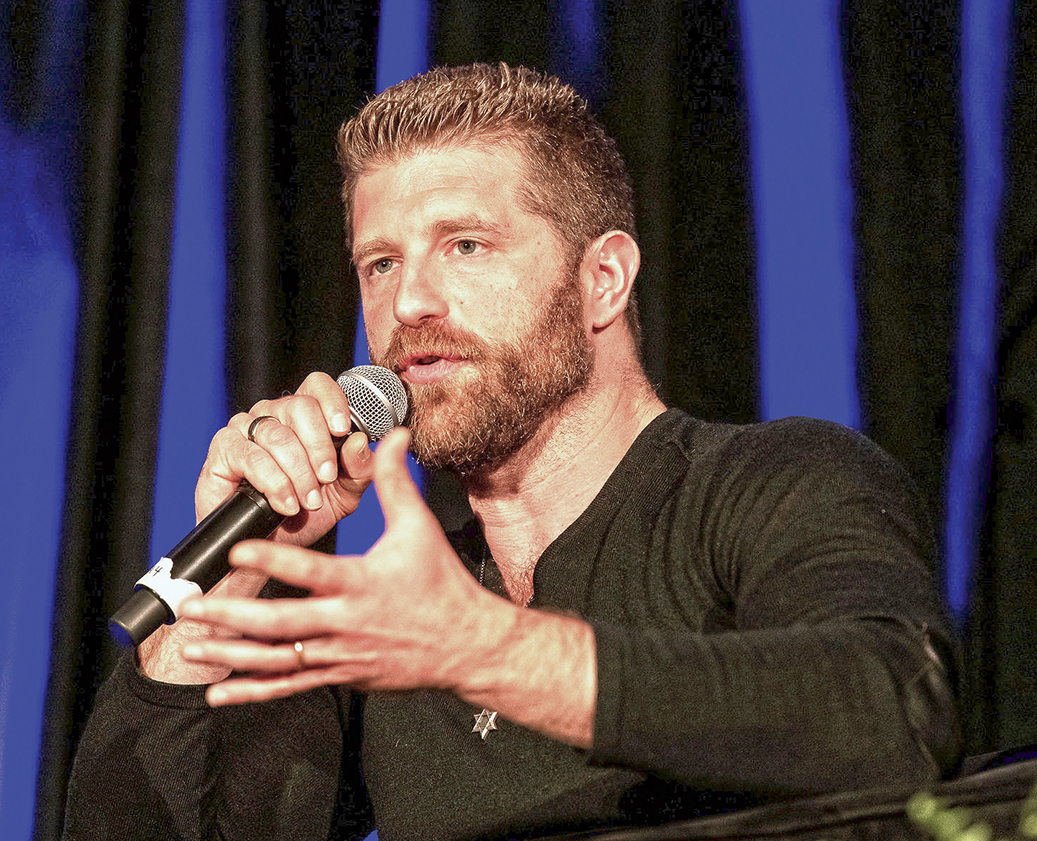
By Brian Fishbach, Jewish Journal (Los Angeles)
On Oct. 7, 2023, Jonah Platt was rehearsing for the West Coast premiere of the play The Engagement Party at the Geffen Playhouse in Westwood.
It’s a play about a friendly gathering that devolves into a slew of accusations over a missing engagement ring. Tempers flare and bridges are burned, possibly forever.
Since then, he says, “I haven’t spent much time pursuing performing opportunities. I’ve been really consumed by Jewish advocacy.” Oct. 7 divided everything.
Platt is a husband, a father and part of a family in the public eye. Two months later, in December 2023, Platt sat on a panel with an Israeli artist, an Oct. 7 survivor, and two Jewish creators. Across from them were four pro-Palestinian advocates.
About a half-hour in, Platt tried to frame the room in human terms. “One side has their story, their truth, their lived experience, the other has the same, we don’t have to convince the other to see it the exact same way,” he said. “We just have to see each other and acknowledge that we’re both in this situation…and treat each other like human beings and find the way out of it.”
The pushback came fast. By summer 2024, Platt started shaping a project built around long conversations. The months after the attacks were full of arguments, pressure, fear, and confusion. He wanted a space where people could talk without trying to win.
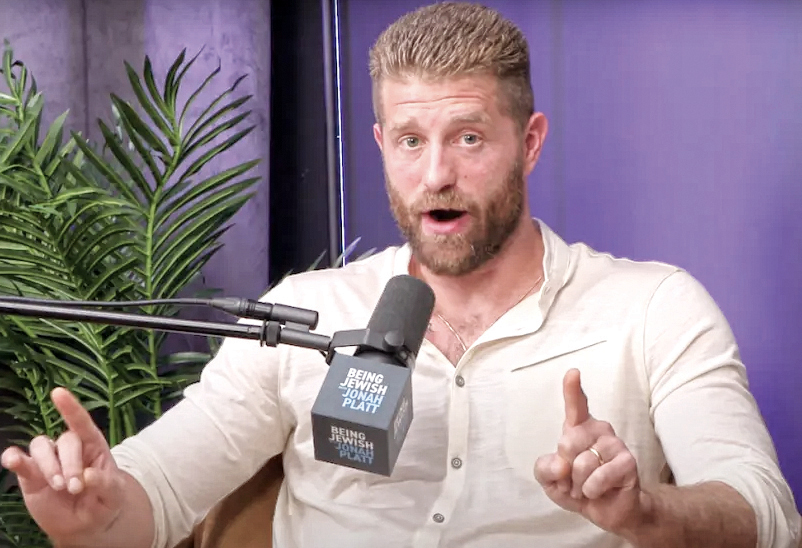
He built the podcast Being Jewish with Jonah Platt around a simple structure: an opening monologue, a guest, and enough time to think.
The guest list grew fast: actor Skylar Astin (Pitch Perfect) was on the first episode, helping Jonah explain why this show exists at all; TikTok star Montana Tucker came on to talk about fame, family, and what it meant to speak up about Israel during the 2024 election; Rabbi David Wolpe, who has known the Platt family for over 30 years, wrestled with Platt about “shortcut empathy.”
More prominent guests showed up: English comedian David Baddiel, author Dara Horn, Auburn Men’s Basketball head coach Bruce Pearl. Actor Jason Alexander stepped into a raw conversation about hostages and public pressure. Van Jones, the first non-Jewish guest, spoke as a Black ally who has spent years thinking about the bond and the gaps widening between the two communities.
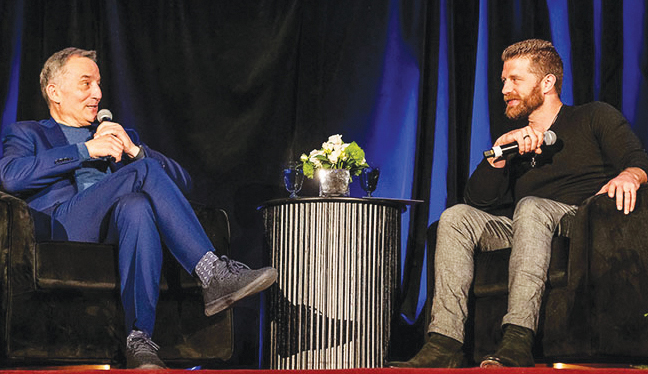
Platt is still regularly seen on stage, but in different settings. He hosts community events, gives talks, and sometimes sings at the end of his own episodes. He credits his formative years in high school for his fluency in handling audiences on the fly.
He looks back at his acting career with affection, but without much longing. “There are aspects of it that I think of fondly, but don’t necessarily miss,” Platt said. “I’m just so fulfilled by what I’m doing now.”
He’ll keynote the Jewish Federation of Greater Dayton Presidents Dinner, May 17, the kickoff of the Federation’s 2026 annual campaign.
We asked several Israel information influencers based in Los Angeles what they would hope to read in a story about Platt. The first question was always about his older brother, Ben, and Ben’s public condemnations of Israel. In our interview, Platt did not run from the topic, but was careful not to turn it into a family spectacle.
“Something that many people can relate to is there is someone in your life, whether it’s a relative or a colleague or a friend or whatever, who you do not see eye-to-eye with on the Israel issue or maybe any issue affecting Jews at all,” Platt said.
“To the degree that it is an important person in your life…if it’s somebody you care about and in all other circumstances would want to have a good relationship with, I think you’ve got to prioritize the relationship,” he said.
What has allowed him to do that in personal relationships is “having face-to-face, calm, compassionate, lowered stakes conversations, lengthy conversations, like four-hour conversations,” Platt said.
Those talks do two things. They allow him to “really check the temperature of this person and where they might be coming from…I then can sort of see for myself, OK, they don’t want to wage jihad on me,” he said. “They just have this unfortunate sort of misunderstanding out of propaganda and ignorance. And at least now I see where it comes from and I understand where they stand as a person on this, and I can release a little something in my heart.”
He is blunt about the limits of any one conversation. “We’re not going to solve the Middle East,” Platt said. “Somebody will message me, what are we going to do about this person? And I’ll say, it doesn’t matter, that one person believing A, B or C (has no) bearing on anything, unless you’re talking about a political leader or a world leader or something. No one person’s opinion on the Middle East or Jews is moving the needle…So we just have to chill out, keep the relationship first.”
If nothing changes, he said, that can still be a kind of answer. “After you’ve had this talk, if they’re not moving the needle at all on it, it’s something you don’t need to keep talking about,” he said. “And maybe that means that person isn’t as close to you as they could be, and that’s OK. And we have to be OK with that. It’s better to keep them in your life. It’s not an all-or-nothing situation.
“At the end of the day, most of us want the same things. Security. Opportunity. Prosperity. The chance for a better tomorrow for ourselves, our families, and our communities. Right? Lead from that.”
Jonah grew up watching his mother, Julie Platt, move through Jewish life in public and private. Julie spent her childhood in Wichita, Kan., often one of the only Jewish students in her class. In their joint podcast episode, she describes the shock of arriving at Camp Ramah in Ojai, Calif. (Jonah is also a Camp Ramah alum). “I mean, everywhere I turned were Jews my age,” she said. “I just couldn’t get over it. I got to have friends my age who were Jewish.”
Camp led to decades of leadership. Julie eventually served as chair of the Jewish Federations of North America and became a central figure in efforts to secure Jewish institutions, push for better Holocaust education, and invest in young adult programming.
Jonah does not see his podcast as following in her footsteps, but the pattern is visible: Jewish identity as a source of duty, not only background.
He grew up watching his father, producer Marc Platt (Wicked on Broadway and both Wicked movies, Philadelphia, Legally Blonde, La La Land among his credits), work on stories that tried to say something about the world, not just pass time.
The Platts maintained a home where Shabbat dinners, synagogue life, and charity work were the expectation. It was a home where creativity was encouraged quite a bit.
He also knows that not every Jew grew up with such support, which shapes how he talks about Jewish unity.
“If we can get to a place of mutual respect and communication, that to me is Jewish unity…we’re all rowing in the same direction, even if it’s at different speeds and it looks a little different.”
He said people often do not know what to do with someone who refuses all-or-nothing tests. “I’m just so not all or nothing.”
A word he keeps bringing up is inclusivity. “There’s no one right way to be Jewish,” he said. “And I think as a community we’re not doing a great job at that.”
It’s also about how Jews see themselves. “Getting folks to flip that switch from the fear-based mindset (of), I need to keep my head down, I need to blend in, I need to hide the Jewish star, I need to apologize for my success,” Platt said. “And ditch that and flip the switch to, I’m proud of being Jewish. I have a lot of respect for myself as a Jew. I celebrate our accomplishments and I’m going to take up space as a Jew in the public square and normalize that Jews are here, we’re not going anywhere, and we have much to offer.”
Jewish Federation’s Presidents Dinner with Jonah Platt, 5 p.m., Sunday, May 17 at the Boonshoft CJCE, 525 Versailles Dr., Centerville. Tickets are $125 each. Kashrut will be observed. Participants will be asked to make their pledges to the 2026 Jewish Federation Annual Campaign. RSVP by May 8 here.
To read the complete May 2026 Dayton Jewish Observer, click here.