
Why ripening religion still matters

(even if Hitchens thought it’s all hogwash)
By Rabbi Aubrey L. Glazer, Beth Abraham Synagogue
Everybody regales how Christopher Hitchens never met a sacred cow he didn’t try to turn into brisket. In God Is Not Great, he famously declared that “religion poisons everything,” a line he delivered with the confidence of a man who has never coaxed anything into ripening except his own indignation.
If he’d lived in a shtetl, he’d have been the fellow standing in the marketplace shouting, “These figs are a menace!” while the rest of us were just trying to tie a little reed around the first one we saw.
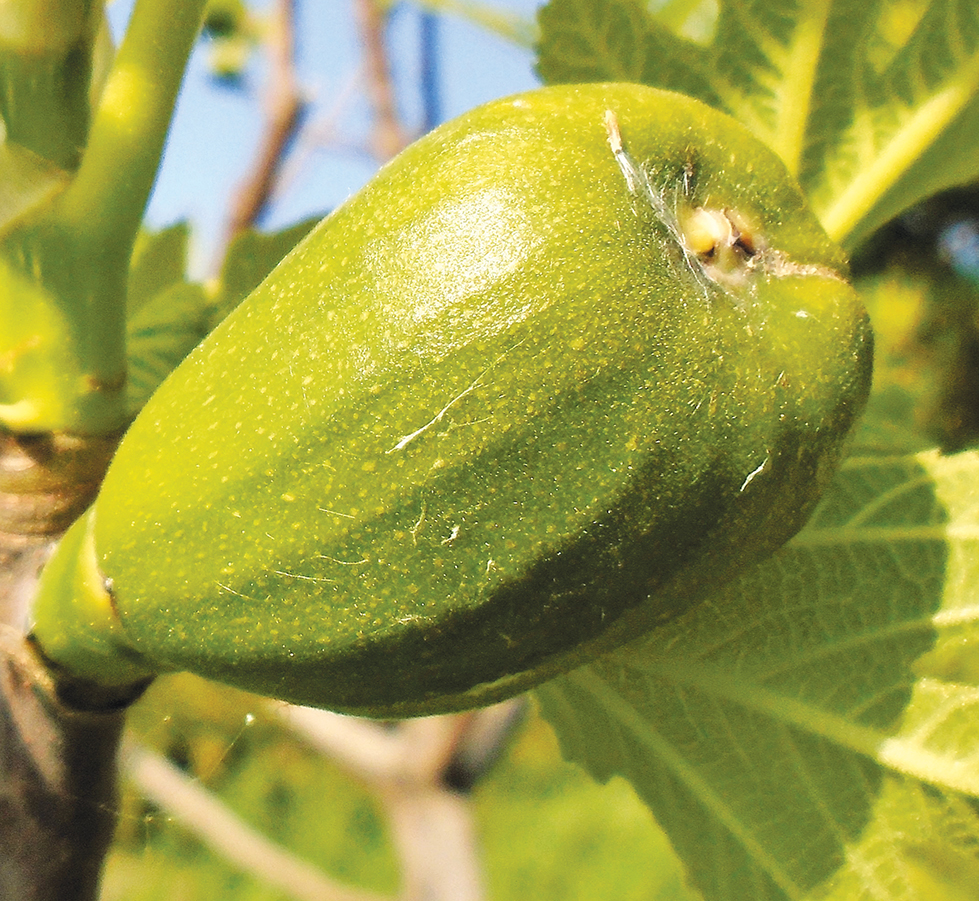
And that’s precisely how the Mishnah imagines the beginning of religious life — not with thunder, not with dogma, but with a farmer whispering over an unripe fig.
“A seeker who sees a first ripening fig or pomegranate ties a reed rope around it and says: ‘Behold, this is first fruits (Mishnah Bikkurim 3:1).’”
That’s not poison. That’s tenderness. That’s a human being saying, “I don’t have much yet, but what I have, I offer.”
Hitchens wanted religion to show up fully baked, wearing a tuxedo, and carrying a notarized certificate of rationality.
But the Judaism of Shavuot begins with the opposite instinct: bless the beginnings, honor the unripe, trust the slow work of becoming.
In honoring the unripe, it behooves us to recall Mark Twain, who could spot human foolishness from 50 paces and still hit it with a slingshot. He once wrote in Following the Equator, “Man is the only animal that blushes. Or needs to.”
If he’d been standing next to Hitchens, he might have added, “And he’s the only animal who insists the fruit is rotten before he’s even planted the tree.”
And that, oddly enough, is where Jeff Tweedy strolls into the field, guitar in hand, looking like he’s been waiting for someone to notice the flowers all along.
Tweedy has always been a songwriter of beginnings — of the tremble before the bloom. In one Wilco song, he murmurs, “one tiny flower,” a line so small you could miss it if you blink. But that’s the point.
His flowers, as the text puts it, “are never triumphant; they are confessions disguised as petals.” Born in Belleville, Ill. in 1967, raised Catholic, shaped by punk, alt-country, and the long arc of recovery, Tweedy ripened musically from the raw earnestness of Uncle Tupelo to the experimental flowering of Wilco to the stripped down honesty of Tweedy.
His quiet, sincere conversion to go on the road with the journey of Judaism in midlife — undertaken not for spectacle but for love, family, and integrity — makes his sojourning also one of humility.
He entered the tradition the way his songs approach flowers: gently, without presumption, willing to be shaped. If Hitchens had been paying attention, he might have noticed that this is what religion looks like when it’s not trying to be great. It’s just trying to grow a soul — which, incidentally, is harder than writing a polemic and pays considerably less.
Now imagine Luce Irigaray wandering into the orchard, shawl blowing like a philosophical flag, looking as though she’s about to scold the apple trees for internalized patriarchy. Born in Belgium in 1930, trained as a linguist, psychoanalyst, and philosopher, Irigaray spent decades telling Western civilization to slow down, breathe, and stop trying to dominate everything that moves.
She argues that we’ve forgotten how to grow. Plants insist on slowness, reciprocity, and the patient unfolding of form. To think vegetally is to honor the subtle, the seasonal, the interdependent. Tweedy’s flowers embody this. Bikkurim (first fruits) ritualizes it. The Bible’s Ruth personifies it. And Shavuot becomes the festival that teaches us to trust the slow work of becoming.
Twain would have loved Irigaray, if only because she would have told him that the trouble with people is they want peaches in January and wisdom by lunchtime — and he would have agreed, lit a cigar, and blamed Congress.
Then there’s Reb Nachman of Breslov, great-grandson of the Baal Shem Tov, born in Medzhybizh in 1772, who fused Chasidic ecstasy with psychological depth.
He insisted that every blade of grass sings its own melody. “To walk through a field,” as the text puts it, “is to walk through a choir.” Reb Nachman would have listened to Hitchens for about three minutes, smiled sadly, and said, “My friend, you’re listening for thunder. Try listening for grass.” And Shalom Aleichem would have added, “And if the grass is singing, it’s probably complaining about the weather.”
Furthering that process of honoring the unripe, we could also turn to James Fowler, born in 1940, a Methodist minister and developmental psychologist at Emory, who became famous for his “stages of faith.”
People often misuse his model as a spiritual staircase — climb high enough and you get a diploma in enlightenment. But Fowler’s real insight is simply that faith ripens. It softens. It becomes more porous, more relational, more capable of holding complexity without panic. The early stages — external, inherited, rule-bound — are the hard, green fruit the farmer marks with a reed. The individuative stage, where the soul begins to question, is the moment the fruit softens and the flower opens — Tweedy’s terrain of trembling honesty.
And the post critical stage — where paradox becomes a companion rather than a threat — is the ripening itself.
But Chasidism, especially in its metamodern rereading, knows that ripening is not a one-way street. Fruit over ripens. It falls. It composts. It begins again. Revelation is not a stage but a pulse. The soul does not graduate from simplicity; it circles back to it with new tenderness.
Hitchens wanted religion to be a finished product. But the Judaism of Shavuot says: finished products are for factories. Souls are for fields.
We live in a moment of spiritual exhaustion. Certainty has become a performance art. Outrage is a competitive sport. And the loudest voices — religious and secular alike — tend to be the least ripened.
Shavuot offers a counter practice: tie a reed around what is beginning, bless what is unripe, trust what is still becoming.
This is not naïve. It is disciplined hope. It is the courage to say: I am not finished, and that is not a flaw. It is a feature of being human.
While I appreciate any thoughtful skepticism, Hitchens doth protest too much in arguing that religion poisons everything — really?!? Alas, if we are honest, what poisons us today is not religion. It is the refusal to grow. The refusal to soften. The refusal to admit that we are all, in one way or another, unripe fruit tied with a reed.
Twain would have said, “The problem with people isn’t that they’re unripe. It’s that they insist they’re peaches when they’re still green as cucumbers.” Shalom Aleichem would have nodded and said, “And then they blame the rabbi.”
So Shavuot as the Feast of Weeks gives us three gestures — not commandments, not dogmas, just three small, stubborn practices.
First, name one place in your life where your faith, courage, or compassion is still unripe — and bless it.
Second, nurture one fragile beginning with deliberate tenderness.
Third, offer something unfinished to the world. An apology not yet perfected. A creative spark not yet polished. A gesture of repair not yet complete. This is the wit of Shavuot: the only way to grow a sweet fruit is to risk sharing a sour one.
And in the end, the promise is simple. They are the promise that even one tiny flower — whether in a field, a song, or a soul — can be enough to begin a harvest.
Hitchens never understood that religion is not great. It’s growing. And that is its greatness (even if Hitchens thinks it’s all hogwash) — stubborn, slow, and, like all good fruit, impossible to rush, forever ripening.
To read the complete May 2026 Dayton Jewish Observer, click here.