‘Looking for new ways to continue to make a difference’
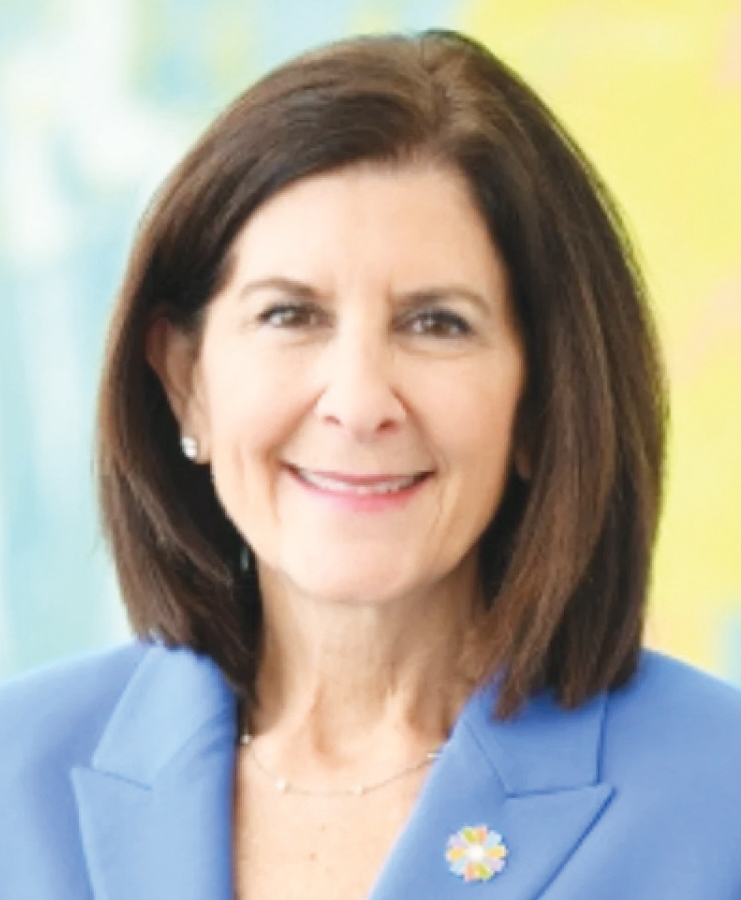
An interview with outgoing Dayton Children’s President & CEO Deborah A. Feldman
By Marshall Weiss, The Dayton Jewish Observer
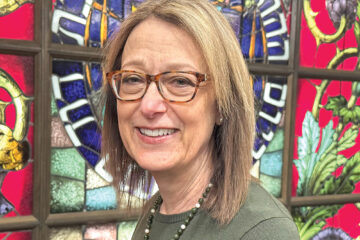
After 14 years as president and CEO of Dayton Children’s Hospital, Deborah A. Feldman retires June 30. She came into the role after 30 years with Montgomery County, the last 16 as county administrator.
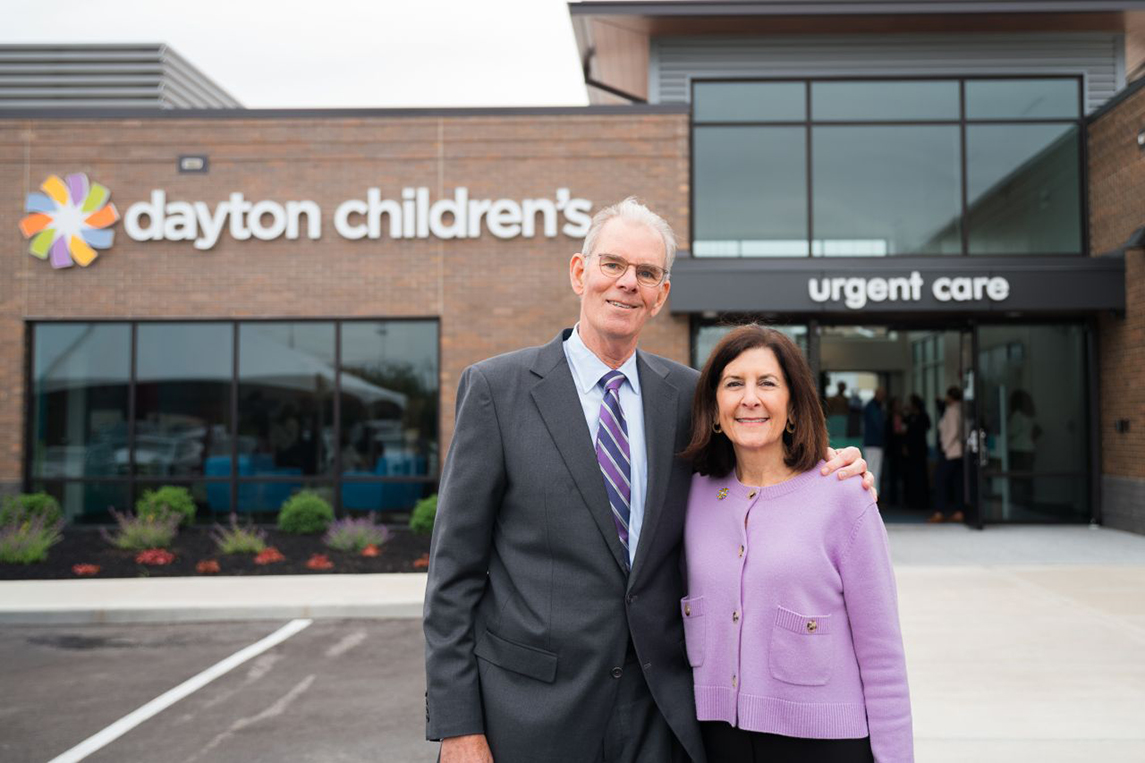
To celebrate Feldman’s contributions to the region, Dayton Children’s has named its new urgent care clinic in West Dayton the Feldman Center for Healthy Children; the University of Dayton presented her with an honorary degree at its May 10 graduation ceremony.
Here, the Washington, D.C. native and Jewish Federation of Greater Dayton past president talks about why it’s time to retire, the greatest challenges she’s faced at Children’s, and her plans for the future. This interview has been edited for length and clarity.
How did you decide to retire at this time?
It was a really difficult decision because I love what I do. I love the mission, and I love seeing the kids and families every day. But I felt that at this point in my life that it was time for me to find some flexibility. I’ve been in full-time work for 45 years. It was time to really think about different ways of finding meaning. And particularly my grandchildren are at key ages at 12, 10, 5, and 2, and I really wanted to be able to have some more time to spend with them.
The world threw you some curves that no hospital administrator could ever prepare for. How did you navigate that?
I don’t think any of us ever really thought that we would see the world shut down the way it did. But we never shut down here at Dayton Children’s. I came to work every single day. I never worked from home. You learn a lot about yourself. You learn a lot about the people that you work with. And what I learned was that I worked with an incredible team that was so secure in what we did here that our goal was to keep it going. Leaders don’t know all the answers and you have to be willing to admit that, but communication is absolutely critical.
I spent a tremendous amount of time on virtual town halls communicating what we knew, when we knew it, always saying that this could change tomorrow because none of us really knew. And I knew from the beginning that we had to take care of our staff. We never laid anyone off here at Dayton Children’s. We paid everybody, we continued to pay everyone because we knew these people had committed themselves to us and we were going to be committed to them.
But we did ask them to do some different things. We had people come in to be screeners and temperature takers that would normally not be doing that kind of work. But we really kept our staff engaged. We kept our staff compensated, and I think that paid dividends in the end.
What were some of the toughest decisions you had to make during the Covid pandemic?
One of the toughest decisions was shutting down surgeries. The governor had required we do that. Children were getting sick and there was this sense of, why can’t we continue business as usual? Sending staff home, even though they were going to be paid, was incredibly difficult.
The hardest decision of the entire time was the vaccine. And we made the decision to mandate the vaccine here at Dayton Children’s. It really came, frankly, as a great surprise to me that everybody didn’t want the vaccine, because I wanted the vaccine. We had a small but strong minority of employees that did not want to take the vaccine.
We felt strongly that we owed it to the community that when they brought their children here, that they would be safe, and that we owed it to our staff that had believed that the vaccine was something that would keep them safe, that their colleagues would also be. And so we mandated it. There were a lot of difficult conversations. I spent time rounding in the hospital, trying to just listen. Two of our employees died of Covid, one before the vaccine and one after. And that was just so tragic.
Was Covid the most difficult challenge that you’ve experienced at Children’s?
Oh, for sure. No question about it. It’s in its own category from everything else that we’ve done here. I wasn’t overly comfortable with remote work and was anxious to have staff come back. We still do have some staff who are remote in their roles, and it’s fine.
What are the other great challenges you’ve faced?
The biggest challenge I faced was when I came to Dayton Children’s, frankly, we were not thriving as an organization. We had very stiff competition from Cincinnati Children’s to our south and Nationwide Children’s to our east. We had a lot of difficulty attracting physicians, and we didn’t offer all of the services that our families needed.
So what we needed was to have a clear North Star of why. Why did we exist? We believe that every child in the Dayton region deserves a great children’s hospital close to home. Our mission is the relentless pursuit of optimal health for every child within our reach.
We became laser focused on what the needs of the Dayton region were and what the needs of the children of the Dayton region were. And so we had a very aggressive strategic plan. We’ve gone from 47 employed physicians to over 260 employed physicians.
We’ve added 12 specialties. We have become a Level 1 trauma center. We’ve become a Magnet hospital, which is the highest nursing designation a hospital could have. We’re a Level 1 pediatric surgery center.
The most important thing that I had to do here at Dayton Children’s was constantly communicate where we were going, constantly rally people around our strategies. We knew that in order to really succeed against a stiff competitor who was an excellent hospital, we had to provide what we call above-and-beyond experience.
Getting families in quickly and then providing them with an exceptional experience, we believe is sort of our secret sauce. And we have amazing physicians here. Once we get those families in, we usually keep them.
The result was that we’re 300% bigger than we were when we started this, and we certainly don’t have 300% more children in the Dayton region. We have convinced our families that this is the place that they can come if their children need pediatric healthcare, that they should look to us first. We know we’re not always going to be able to meet their needs, but then we want to be the very best connector of care possible.
One area you’ve significantly expanded is mental health services.
It’s definitely something that has dramatically increased in our kids. Certainly there was always some mental illness, and certainly some of it was undiagnosed. No question about that.
But the volume that we’re seeing is due to the changing nature, frankly, of our society and of our kids. And it is serious. It is the healthcare crisis of this generation.
When I came to Dayton Children’s, we did not employ one psychiatrist. We did not have any inpatient beds for behavioral health or mental health. We have 24 pediatric child psychiatrists at Dayton Children’s now and 48 inpatient beds, and they are almost usually full.
What we know is that with early intervention and treatment, most of this can be resolved. But that if it goes unresolved, it will end up being a serious adult or lifelong adult mental illness.
We know that 50% of all adult mental illness begins in childhood. If we can address that early, we can change that trajectory.
Children’s healthcare issues have been greatly politicized in recent years. How have you navigated that?
We will support any initiative from either party that supports kids. But we also know that we are the trusted pediatric advisors of this community and it is our responsibility to be science-based.
There are times when we take positions that we believe are rooted in science that may not be ones that make some of our elected officials happy. And of course, the one that has been focused on the most is vaccines.
We are strong supporters of childhood vaccines. We support the American Academy of Pediatrics vaccine schedule, and we share that with our families.
That said, we respect our families as well, and we believe the key is to keep the conversation going. We don’t want to shut our families down, but we try to provide them with the most science-based information that we can.
And then we hope that over time, those that are reluctant will eventually feel that they want to follow our advice. We know that’s not always the case. But we don’t take positions just because we have opinions. We take positions based in science.
How have you maintained your own emotional health?
It’s really important to be able to compartmentalize. It’s not always easy, but it’s important that you enjoy each segment of your life. I have been blessed with an incredible family and two amazing children and a friendship group that has been really so supportive of me, and blessed to be in the Dayton Jewish community.
I’ve always been active in the Jewish community here in Dayton. And I get a lot of my enjoyment from participating in our activities. The Dayton Jewish community grounded me in a place where I felt like I really belonged.
What will you be up to now?
I am going to spend more time with the grandkids. And we are going to travel. But I am looking for what’s the next role and how I can make a difference. I’m definitely not stepping back from my interest in the well-being of children and the Dayton community and other interests that I have, more nationally.
I’m just going to be looking for new ways to continue to make a difference and further what interests me. But I’m going to do it with a little bit more flexibility. I am looking forward to that.
To read the complete July 2026 Dayton Jewish Observer, click here.