

When good values go astray

Jewish wisdom warns against pursuing even our noblest ideals without limits
Jewish Family Education with Candace R. Kwiatek, The Dayton Jewish Observer
In the mid-19th century, maskilim — advocates of Haskalah, the Jewish Enlightenment — launched a campaign in the Russian empire to rescue their Jewish communities from crushing poverty, intellectual isolation, and civic alienation by expanding the educational curriculum.
These modernizers envisioned the sciences and humanities flourishing alongside traditional Torah study, echoing revered sages across the ages who encouraged secular knowledge to complement and enrich traditional Jewish learning.
They saw the dual curriculum, paired with vocational training and local language mastery, as a noble pursuit rooted in Jewish values of education, self-sufficiency, and civic dignity.
But noble ideas require resources — and public trust. Lacking communal backing, funding, and manpower, the maskilim made an alliance with the czarist state to create government-funded Jewish elementary schools and rabbinic seminaries.
Blinded by both a deep passion for their educational venture and the naïve belief that their goals aligned, the maskilim willingly partnered with a regime whose inherent hostility they fatally misjudged.
It was a devastating miscalculation. While the reformers viewed the partnership as a pathway to liberation without compromising Jewish identity, the government’s true aim was not to empower Jewish youths, but to systematically alienate them from their traditions, undermine their religious autonomy, and enforce assimilation.
Traditional communities launched fierce boycotts. To keep the system functional, the state filled the empty seats with orphans, children of impoverished families, and youths lured by exemptions from the brutal military draft.
Instead of the harmonious dual-curriculum synthesis the maskilim envisioned, the regime marginalized Torah study, installed assimilationist teachers, and discouraged observance.
Worse, over the ensuing decades, these state schools funneled graduates into Russian universities, which offered the ultimate prize: the legal right to leave the impoverished Pale of Settlement for major Russian cities.
Hungry for opportunity and eager to evade conscription, ambitious youths abandoned religious observance and fled, turning the maskilim’s passion for education into an inadvertent pipeline for mass assimilation.
Yet when these newly secularized graduates entered the wider world, they found no true acceptance in Russian society.
Instead of returning to the synagogue, however, they turned to the radical underground, becoming architects of the Marxist and socialist movements that would eventually help topple the empire.
Meanwhile, realizing the maskilim had partnered with the oppressive regime to erode Jewish life from within, the Jewish community erupted into bitter internal conflict—poisoning trust between secular and religious factions for generations.
The tragedy of the maskilim illustrates a timeless, uncomfortable truth: Even the noblest Jewish values can go dangerously astray.
We often treat ideals like education, compassion, or civic engagement as absolute goods. Yet classical Jewish thought has long warned of this ethical vulnerability — a paradox where a virtue, pursued without boundaries, does not merely lose its moral force; it tips into its opposite.
How do we anchor virtues before they tip? The answer lies in two ancient traditions that offer a blueprint for the modern world.
The first comes from Maimonides, the 12th-century sage who adapted classical moral philosophy into Jewish ethics and law through his concept of derech haemtza, the middle way (Aristotle’s golden mean).
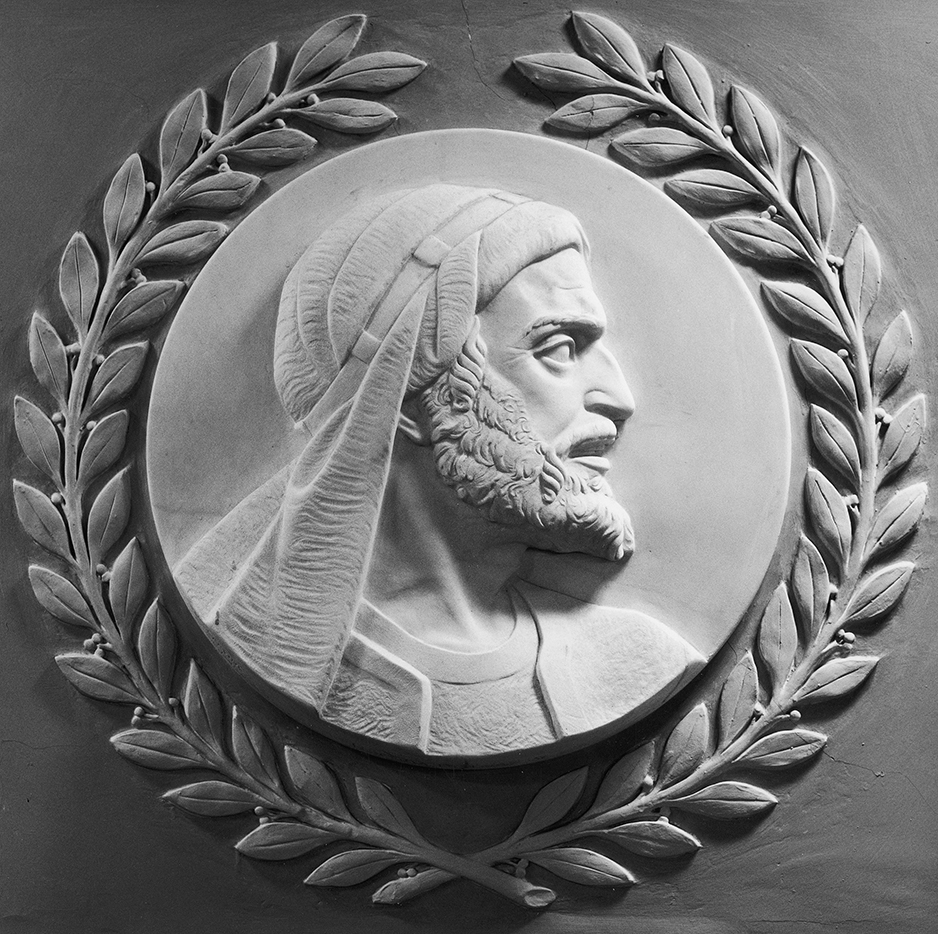
This framework recognizes that human character traits naturally tend to pull us toward dangerous radicalism.
Maimonides taught that true virtue rarely lives at the edges; it resides in the balanced middle ground between two extremes.
Generosity is a sacred value, yet taken to the extreme, it becomes reckless self-ruin.
Honesty builds real trust, yet stripped of tact, it becomes blunt cruelty.
Later Jewish mystics echoed this same warning, teaching that even divine traits like lovingkindness (chesed) and strict justice (gevurah) become destructive unless they keep each other in check.
A second, equally vital insight comes from Mussar, a Jewish spiritual practice. Its modern revival blends traditional rabbinic ethics with reflective focus and character development.
By prompting individuals to weigh inner impulses against ethical imperatives, Mussar highlights the split-second gap between an external trigger and an automatic emotional reaction.
This mindfulness allows one to pause, examine the inner landscape, and choose an ethical response instead of reacting solely out of raw emotion.
The Torah offers a stark example of unchecked impulse. In Genesis 34, after the violation of their sister, Dinah, Jacob’s grief-filled sons Simeon and Levi allowed their righteous desire for justice to devolve into vengeful rage and the slaughter of an entire city.
Well-meaning values can become just as destructive when driven by blind idealism.
This danger is evident in the overprotective parent whose relentless drive to shield a child from hardship robs them of necessary resilience, and in the devoted family provider whose punishing, 80-hour workweeks completely disconnect them from the very home and children they give their entire lives to support.
Whether the fiery corruption of moral virtue or the blinding light of good intentions, both extremes reveal the fatal cost of even our highest impulses left unchecked.
The tragedy of Haskalah was not a failure of intellect, but a failure of equilibrium.
The maskilim forgot that the highest ideals require the firmest boundaries. Their history remains a haunting reminder: whenever we elevate a single virtue to an absolute, we risk burning down the house we intended to build.
True enlightenment requires both the passion to pursue a better world and the wisdom to anchor our highest ambitions in the moral boundaries that keep us human.
Literature to share
The Spiritual Practice of Good Actions: Finding Balance Through the Soul Traits of Mussar by Greg Marcus. This spiritual guidebook introduces Mussar as a Jewish practice of mindfulness for approaching life’s everyday events with greater balance and more insight. Each chapter develops one of 13 soul traits through real-world character-building stories, daily techniques and exercises, and actionable steps for personal growth.
The Color of Sound by Emily Barth Isler. In this middle-grade novel, 12-year-old violin prodigy Rosie goes on a summer “violin strike” to escape her mother’s crushing expectations and explore new friends and interests. Along the way, Rosie meets a mysterious new girl, joins an improv group, and uncovers family secrets, all while learning that embracing new passions doesn’t require letting go of what she’s always loved.
To read the complete December 2026 Dayton Jewish Observer, click here.