
Activists support Springfield’s Haitians
By Marshall Weiss, The Dayton Jewish Observer
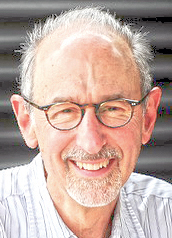
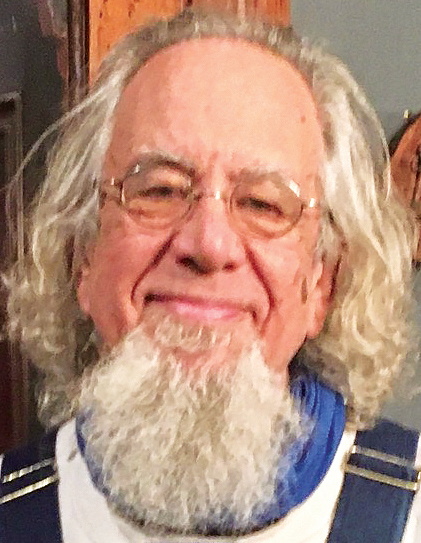
Yellow Springs resident Ellis Jacobs says he became aware of the plight of Springfield’s Haitians the same way as people across the United States.
“Trump and Vance decided to demonize them and scapegoat them in a shocking, appalling, and all-too-familiar way. And you know, it’s hard to ignore it when you see stuff like that going on right up the road from you.”
Three years ago, Jacobs retired from the Dayton office of Advocates for Basic Legal Equality (ABLE), capping 47 years as an attorney, during which he fought for fair housing, voting rights, and environmental protection.
ABLE has handled immigration law since the 1970s. “They have a squad of folks there that are highly skilled immigration lawyers,” he says. “So they’ve gotten very involved in helping out in Springfield. And there’s a lot of work to be done.”
Jacobs says he didn’t handle immigration cases when he worked for ABLE. He does now.
“I offered to come back and help them out as best I’m able. I still have a legal license, and I’m doing a little pro bono work related to Springfield these days,” he says.
His focus is on two legal areas to help Haitians facing ICE detainment and deportation.
“One is to provide information to people who want to support the Haitian community, so they feel comfortable that they have the legal and constitutional right to do what they’re trying to do: to be of assistance and to document ICE activity in the area. We want to make sure people understand their rights so they can exercise their rights.”
He also represents Haitians in Springfield.
“Unfortunately, very recently, ICE has been very active, kind of grabbing people and detaining numerous Haitians,” Jacobs says.
According to the Dayton Daily News, U.S. Department of Homeland Security Secretary Markwayne Mullin said Sept. 4 in Lebanon, Ohio that ICE had arrested 380 Haitians in Springfield since Haitian Temporary Protected Status was cancelled in July.
“I know there are a significant number of Haitians still there,” Jacobs, born and raised in Dayton, says of Springfield.
An estimated 330,000 Haitians in the United States were on TPS until July.
“As Jews, we’ve been the victim of this kind of thing before, and it’s our duty to step up and help out,” he says. “That’s the way I look at it. No ifs, ands, or buts. If Jews don’t get this, why would anybody else get what’s going on there?”
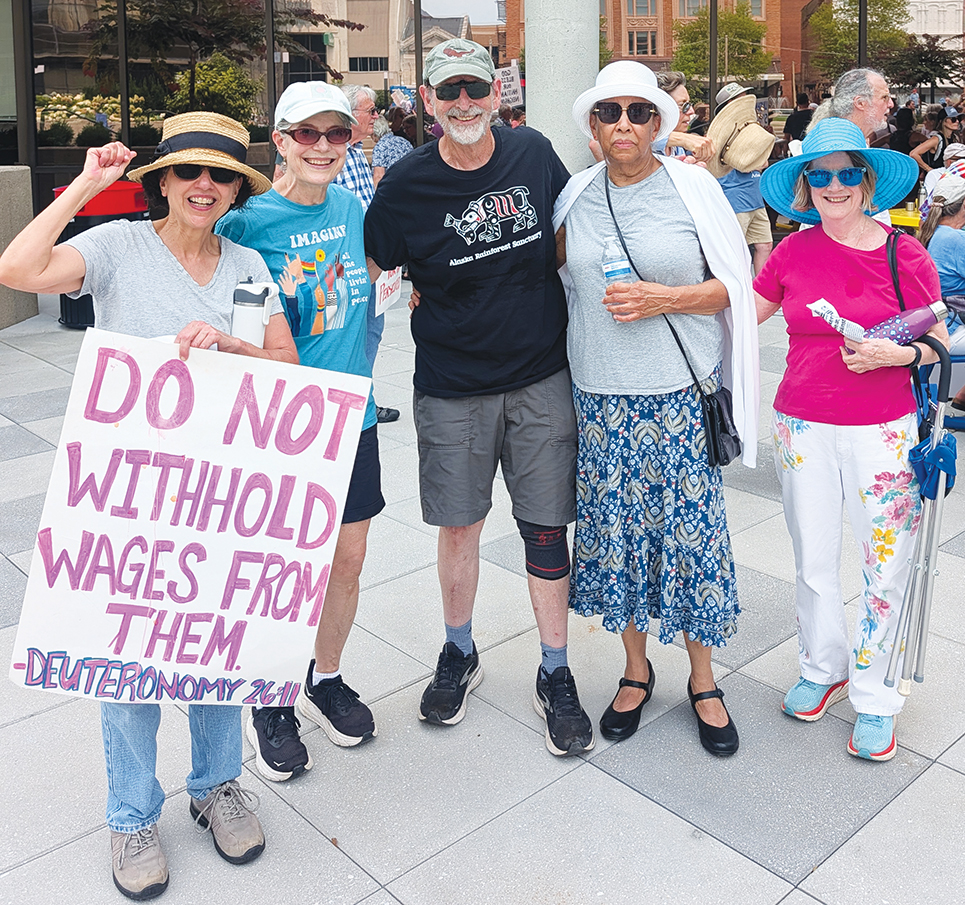
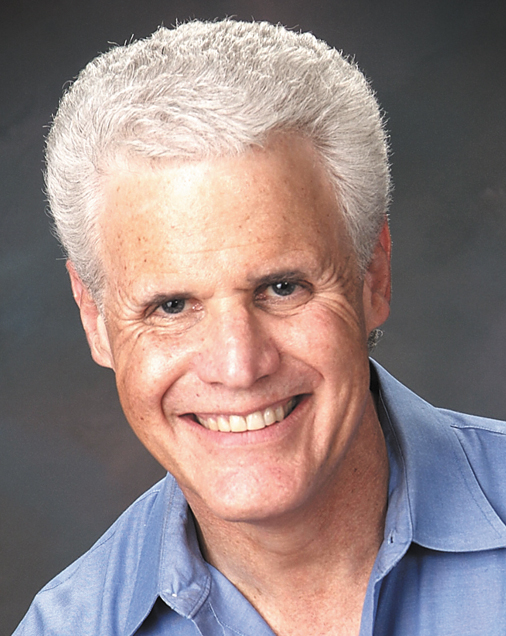
Dave Hurwitz, who lives in Dayton’s St. Anne’s Hill district, joined rallies in Springfield, Aug. 27 and 28. He says Jacobs keeps him informed about how to help Springfield’s Haitians.
“The whole situation is sad, with ankle bracelets and all,” Hurwitz says. “They are so afraid to come out of their houses, they’re not even going to the food bank to get food. So they’re delivering the food directly to the people.”
When Hurwitz was in Springfield, rally organizers urged participants to contact their representatives in Congress, U.S. Senators, and Gov. Mike DeWine.
“I created a text message and sent my email list this message,” Hurwitz says. “It’s just a matter of trying to keep pressure on the legislators, to get that protective status back on, or at least let them remove the ankle bracelets.”
Nancy Cohen, who with her husband, Rich, leads Temple Israel’s efforts to support Springfield’s Haitian community, says it’s an important cause to her. She takes seriously the Torah’s mitzvot (commandments): “Love the stranger, for you were strangers in the land of Egypt (Deut. 10:19),” and “The stranger who resides with you shall be to you as your citizen; you shall love him as yourself, for you were strangers in the land of Egypt (Lev. 19:34).”
“We have a community just down the road looking for a safe place to live and raise a family,” Cohen says. “And they are asking not to be sent back to a country that is, to any objective observer, an unsafe place to be. Unfortunately, current policy has left these families very vulnerable and unable to provide for their basic requirements. Furthermore, they are now afraid because of the cruelty of our government’s actions. I love that our faith asks us to live our values and protect these vulnerable people among us.”
Cohen urges her fellow congregants to bring much-needed items for the Haitians to Temple Israel. She and Rich, who live in Beavercreek, transport the items to Springfield and distribute them to the Haitian Community Support Center and St. Vincent de Paul there.
Beth Abraham Synagogue has also collected items for Temple Israel’s drive.
She also encourages monetary donations to support the Haitian community.
“It doesn’t feel like a lot, given the gravity of the situation for the Haitians right now, but every donation helps. Many in the community are no longer able to work and don’t even feel safe in their homes. The needs of the community are enormous!”
Jacobs says it’s important to follow the leadership of people in Springfield, those who live there and are “responsible for the community and accountable to the community.”
Rabbi Cary Kozberg, who leads Springfield’s only Jewish congregation, Temple Sholom, tells The Observer via email that many Jews in Springfield assist the Haitian community, including himself.
“I’ve been in contact with leadership and made a donation,” he writes.
“That said, some of our members have expressed concern that while attention is given to the Haitians — particularly this boy who committed suicide — there are other kids, Black and White, in Springfield who need attention too — and resources are now more scarce.”
The rabbi’s reference is to 20-year-old Haitian Pierre Damas Bel, a Wright State University student who died by suicide Aug. 31 after ICE had fitted him with a GPS ankle monitor.
Kozberg adds that while some of his members help the Haitians, “others are not so keen on associating with the ‘helping agencies.’ It’s not the Haitians. It’s the kumbaya folks helping them.”
As Temple Sholom navigates the High Holidays, he says the congregation’s focus right now “is on keeping ourselves safe.”
“In the three years since Oct. 7, there have been two churches reaching out to us and those were earlier on,” Kozberg says.
“With all of the assistance Springfield Jews have given others over the years, there’s been little reciprocity — I have received zero calls from clergy, not to mention having to respond to anti-Israel programs at Wittenberg (University).”
To read the complete October 2026 Dayton Jewish Observer, click here.