
Purim: not what it seems

By Rabbi Haviva Horvitz, Temple Beth Sholom, Middletown
There are many Jewish holidays throughout the year, and most of them have a component that is geared toward teaching our children about Judaism.
For example, we build a physical booth on Sukkot that teaches us what it was like to live outside in temporary dwellings during our travels through the desert.
We dance with the Torah and give out sweets on Simchat Torah to remind us that learning is enjoyable. During the Pesach Seder, we are instructed to teach each of our children at his or her level of understanding.
But Purim is different. At first glance, one might think that Purim is for children, but it is not what it seems. I maintain that Purim is a holiday for adults, complete with an R- or even X-rated story, heavy drinking of alcohol, and gambling.
During a typical Chanukah celebration today, our children “gamble” with chocolate gelt and dreidels. Historically, there were times when our ancestors had to hide their studying with activities such as games that were more acceptable to the non-Jewish governments.
The name of this holiday, Purim, comes from the Hebrew word pur, which means lots (as in lottery). When he decided to kill all the Jews, Haman (boo!!!) determined when he would do so via a lottery. For some, Purim has become a good day to buy lottery tickets and go to casinos.
There are a number of important scenes in the story that take place at parties. These events include a great deal of alcohol. Adults celebrating Purim today are encouraged to get so drunk that the lines between good and evil, blessed be Mordechai and cursed be Haman (boo!!!) are blurred.
Is there a lesson here for our children? Or do adults need a reason to let go a little?
Megillat Esther itself is not a story for children. Why did King Ahashverus want his beautiful Queen Vashti to attend his party? And why did she say no? If showing off her beauty required her to be naked, as commentators have discussed, that is not a lesson I would want to teach my children.
For that matter, have you ever questioned what really happened at the “beauty contest?”
There are many different aspects of this story that the rabbis discuss, and most of us don’t learn them until college or rabbinic school.
These aspects support my thesis that the holiday of Purim is not for children and is not what it seems. However, isn’t that the whole point of Purim?
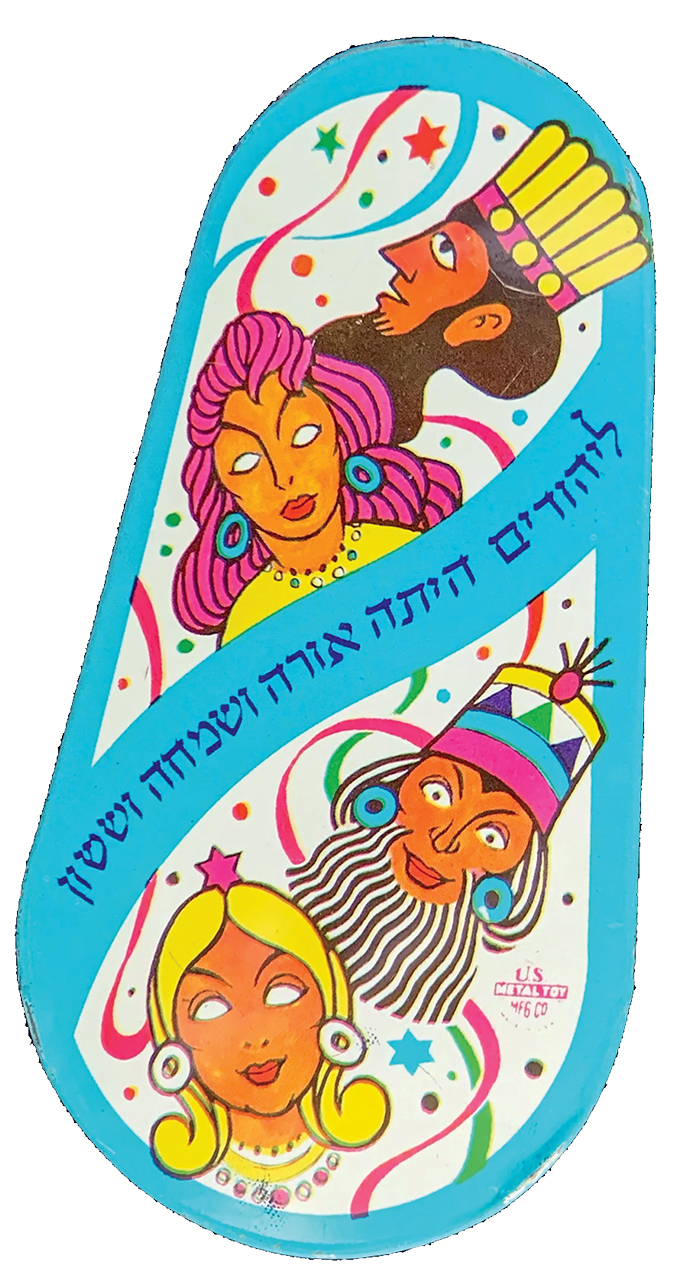
Throughout the story, we learn of concealment and things being not what they seem to be. For example, Esther hid her Judaism until the time was right.
Bigtan and Teresh were hiding their plans to kill the king. Even The Almighty is hidden from us in this story. Mordechai was dressed in a costume of sorts and paraded down Main Street as a reward for saving the king.
So, what do we do? We conceal our true selves and wear costumes and masks. One can argue that people dress up in costumes on Purim to symbolize the hidden nature of the miracles in the story and to remind us that The Almighty’s presence is often concealed in our everyday lives today.
Perhaps the main reason for the holiday of Purim is also concealed. For me, this holiday is merely preparation for the upcoming celebration of Pesach.
We are given time to let loose, to dance, to party, to eat and drink a month before we spend a week with no chametz (foods prohibited during Passover).
There is food in the house that we might not finish eating before Pesach, but rather than throw it away, we bake and give these goodies to friends and neighbors. It is easier to eat the treats we receive than find an excuse to bake for ourselves.
Therefore, I encourage you to take this opportunity to put your worries aside, dress up and let your hair down, eat, drink, dance, celebrate…possibly even buy a lottery ticket.
Have a good time. Listen to the story, maybe even twice, so you don’t miss a word. Tomorrow, we start preparing for Pesach.
To read the complete March 2026 Dayton Jewish Observer, click here.