
Dayton premiere of play based on book about local survivor’s resilience
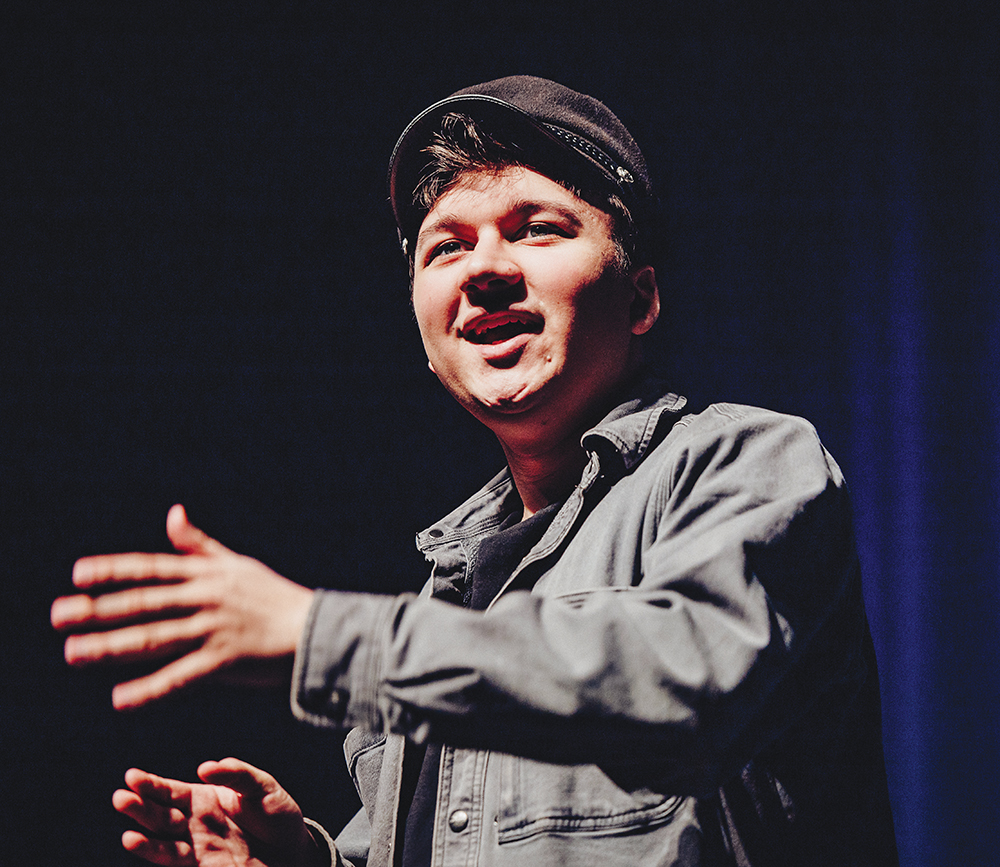
Anschel at Dayton Art Institute March 15
By Marshall Weiss, The Dayton Jewish Observer
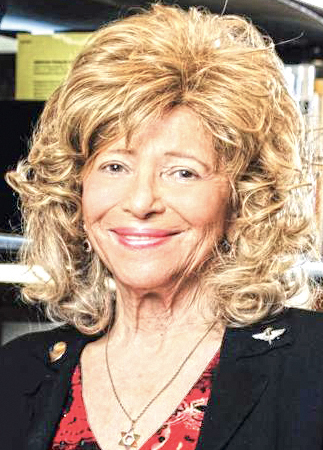
“From the first draft he sent me, I loved it. It just clicked,” Renate Frydman, the Miami Valley’s longtime champion of Holocaust education, says of playwright Michael London’s one-person play Anschel.
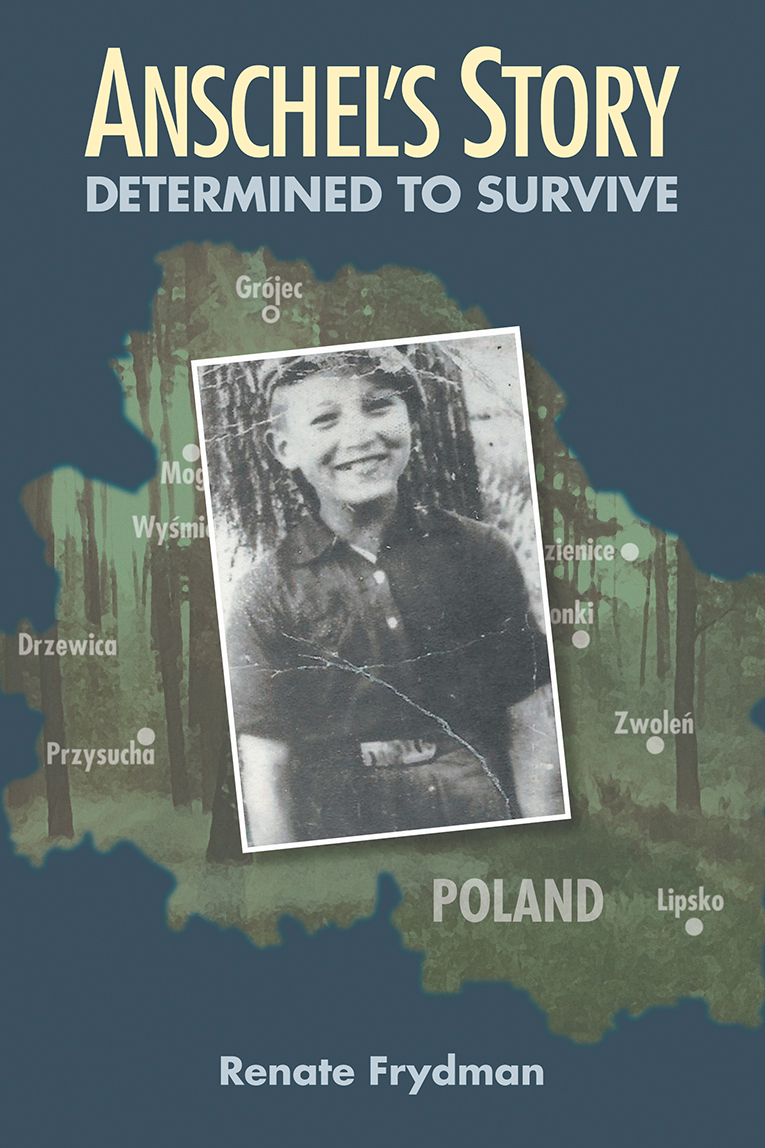
It’s based on Frydman’s 2017 book about her late husband’s story of survival in Nazi-occupied Poland as a slave laborer and then as a partisan fighter, when he was only a youth, after his parents and two sisters were murdered.
After three readings in Dayton in 2024 and its premiere at the JCC of Greater Columbus last year, the one-person play will have its local premiere — presented by the Dayton Art Institute and The Human Race Theatre Company — at 2 p.m., Sunday, March 15 at the DAI.
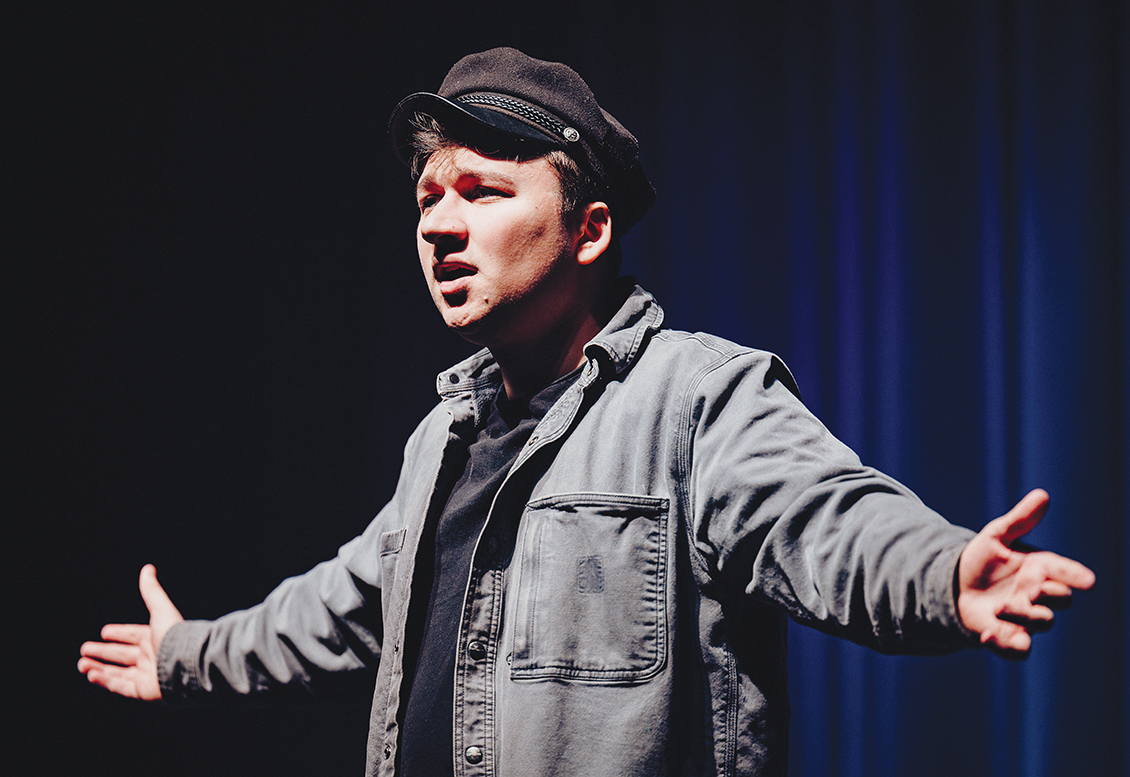
Wittenberg University senior Dawson Hudson plays Anschel in the production, directed by Annie Pesch.
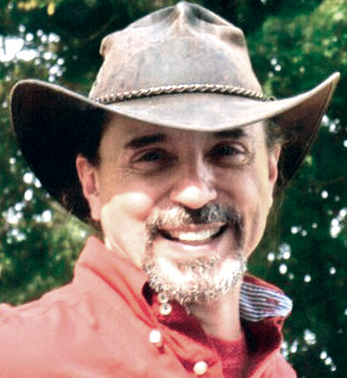
London is a member of the Ohio Playwrights Circle; he adapted the book about Anschel “Charlie” Frydman into a play on commission from the Jewish Federation of Greater Dayton, with grants from the Leon Norman and Mildred Miriam Nizny Memorial Fund and the Eleanor and John Kautz Fund of The Dayton Foundation.
When London and Frydman first met about the possibility of adapting her book into a play, London didn’t think he was the playwright for the job.
“When I read it, I thought this is an important story, a good piece, and it’s valuable,” says London, who specializes in historical plays. A resident of the Brookville area, he travels regularly to London, England, where he is the playwright-in-residence at the Benjamin Franklin House.
“My instinct as a writer was probably not going to match what her expectations were.”
Frydman had a traditional play in mind with various characters telling different parts of the story.
“I’m the Dramatist Guild of America’s representative for Ohio,” London says. “I work with writers all over the country.”
He told Renate he would connect her with someone else.
“She looked at me and said, ‘Well, what would you do?'”
He envisioned the story told only by Anschel as a young man.
“I would want the audience to become as close to that young man and understand his experience as possible.”
Frydman then told London she wanted him to write it.
He told her he wanted to find an actor in his early 20s to portray Anschel.
“The number of times you’ve ever been to a theatre and seen a live performance by a solo actor who’s male and 20 years old is almost never,” London says.
“It’s just not done in theatre. It’s so difficult. I’ve had writers, friends of mine in Chicago and New York tease me — ‘You’re going to do what?’ — That’s very challenging for any actor, let alone a younger actor who may not have breadth of experience to command that stage by themselves and deal with having the show on your back.
“However, as I’ve told them in rehearsal, ‘If you can pull it off, it’s one hell of a ride for the audience.'”
Anschel is set on his 21st birthday, in Hanover, Germany in 1949.
Three young actors performed for the three 2024 readings in Dayton. London secured two other young actors for the Columbus premiere. One moved to New Zealand for graduate work at a university. The other, Hudson, received a standing ovation after the Columbus performance and continues in the role.
Part of a ‘resilience trilogy’
Frydman says the play — which is appropriate for grades six and up — is at its core, about a young person who has the resilience to keep himself going.
“I use the word resilience a lot in my speeches to young people now,” she says. “From 13 to 17, Anschel occasionally had help from this person or that person, but mostly, he managed to survive on his own. The more I think about what he did, the more impossible it seems.”
London says a goal of his writing is to reveal some truth that the audience either doesn’t know or has forgotten.
The truth he found in Anschel, he says, “is the kind of resilience that each of us can find in ourselves, that Anschel found in himself. The question is, are we able to find it?”
Anschel forms the first of three Holocaust-related plays from London, which he describes as a “resilience trilogy,” because “there’s a resilience it takes to survive, there is a resilience that it takes to rescue.”
The second and third plays were in the planning stages when he met Frydman.
He’s since completed the second in the series, Varian, a one-person play about American writer and editor Varian Fry’s time in Vichy France during World War II. There, he helped rescue anti-Nazis and Jews, including artists Marc Chagall and Max Ernst, writer and poet André Breton, and philosopher Hannah Arendt. Funding for Varian came from the Jewish Federation Innovation Grant program.
Readings of Varian were held in January at Wright State University and the Boonshoft Center for Jewish Culture and Education.
Yet to be written is London’s two-person play about sisters Ida and Louise Cook, tentatively titled The English Girls.
The sisters, who lived in London, helped 29 Jews escape the Nazis in Germany and Austria in the lead-up to World War II, mostly after Kristallnacht in November 1938.
The development process for The English Girls, London says, is funded by the Montgomery County Arts District through Culture Works.
Immediately after the March 15 Dayton performance of Anschel, Frydman, London, Pesch, and Hudson will lead a talk-back session with the audience.
The Dayton Art Institute and The Human Race Theatre Co. present the play Anschel by Michael London, 2 p.m., Sunday, March 15 in the DAI’s Rose Auditorium, 456 Belmonte Park N., Dayton. Tickets are $7 and are available at daytonartinstitute.org/events/anschel and at the door.
To read the complete March 2026 Dayton Jewish Observer, click here.