
Being healers
In the News series
Jewish Family Education with Candace R. Kwiatek, The Dayton Jewish Observer
Nearly 30% of Americans Say Mental Health Struggles Are Blocking 2026 Goals, New Talkspace Study Finds.
Feeling Adrift Drives Anxiety, Depression in Young Adults.
For teens, the loneliness epidemic is not a myth.
Millennials, Gen Z Suffering Increased Rates Of Psychosis, Schizophrenia.
Nearly half of teens say social media is bad for youth mental health, report finds.
‘It’s an unseen epidemic:’ Substance abuse disorder rising among older adults, expert says.
America Has Reached Peak Therapy. Why Is Our Mental Health Getting Worse?
The U.S. mental health landscape is alarming, with recent data highlighting a crisis. As of 2025, over 23% of adults — 61.5 million people — experience mental illness, a rate mirrored by adolescents (12-17) with diagnosed conditions, and both age brackets heavily driven by anxiety and depression.
Young adults (18-25) face the highest burden at 33.2%. Tragically, suicide is now the second leading cause of death for ages 10-24, and the 11th overall.
Mental illness results from complex interactions among biological, psychological, social, and environmental factors — a dynamic interplay of nature and nurture.
To illustrate, researchers are exploring possible links between the 2010s popularization of smartphones and social media and a decline in mental health that became apparent shortly thereafter, particularly among adolescents and young adults.
Explanations have included the constant notifications and “refreshing” that drive addictive-like behaviors, disrupted sleep cycles from late-night “blue light” technology use, and exposure to cyberbullying and negative content.
Excessive screen time is also under investigation which, for perspective, currently ranges from 7 to 9 hours daily, 40% to 50% of adolescents’ waking hours.
But these scientific explanations, important as they are, leave out a critical factor highlighted by former U.S. Surgeon General Dr. Vivek Murthy: “I really do think there is a deeper spiritual crisis that we are experiencing…It’s a crisis of meaning, of loneliness, and a crisis of purpose…If we look solely at people’s well-being through the lens of physical health, I don’t think we will be able to fully address the deeper challenges to fulfillment that we are facing. We have to expand the lens to include not just physical but also mental, social, and spiritual (well-being…that) all need tending to and nurturing.”
Murthy’s holistic approach to medicine mirrors that of the 12th-century physician and philosopher Maimonides, who famously recognized the human being as an inseparable unit of body and soul.
Furthermore, Murthy’s analysis of the current spiritual crisis highlights the need for meaning, purpose, and community — core tenets of Judaism with deep biblical roots that remain highly relevant to mental health and healing.
In Genesis, God creates humankind in the divine image. Because every individual is “a whole world in itself,” each person is irreplaceable and responsible for their own unique contribution to the world — regardless of physical condition, social status, or life circumstances. A life that is deliberate, inherently valuable, and purposeful is a life filled with meaning.
Genesis then records God’s command to humankind to “fill and master the earth.” This mandate entails more than just physical expansion. It calls individuals and communities to study the earth and its inhabitants and apply that knowledge to productive, creative endeavors as faithful stewards. Judaism further illuminates this responsibility, teaching that “Each and every person is obligated to say: ‘The world was created for me.’”
Far from promoting ego, this perspective empowers everyone to sustain the world through intentional, holy actions — whether by guarding one’s speech, providing a meal to someone in need, or planting a butterfly garden. A life dedicated to learning, successful and creative stewardship of creation, and uplifting the world through holy actions is one filled with purpose.
Judaism’s most significant and actionable value is its profound emphasis on community. This focus is rooted in the creation narrative, where God observes, “It is not good for the human to be alone.” Judaism asserts that in-person social interaction is essential for a healthy life, deeply impacting both mental and physical well-being.
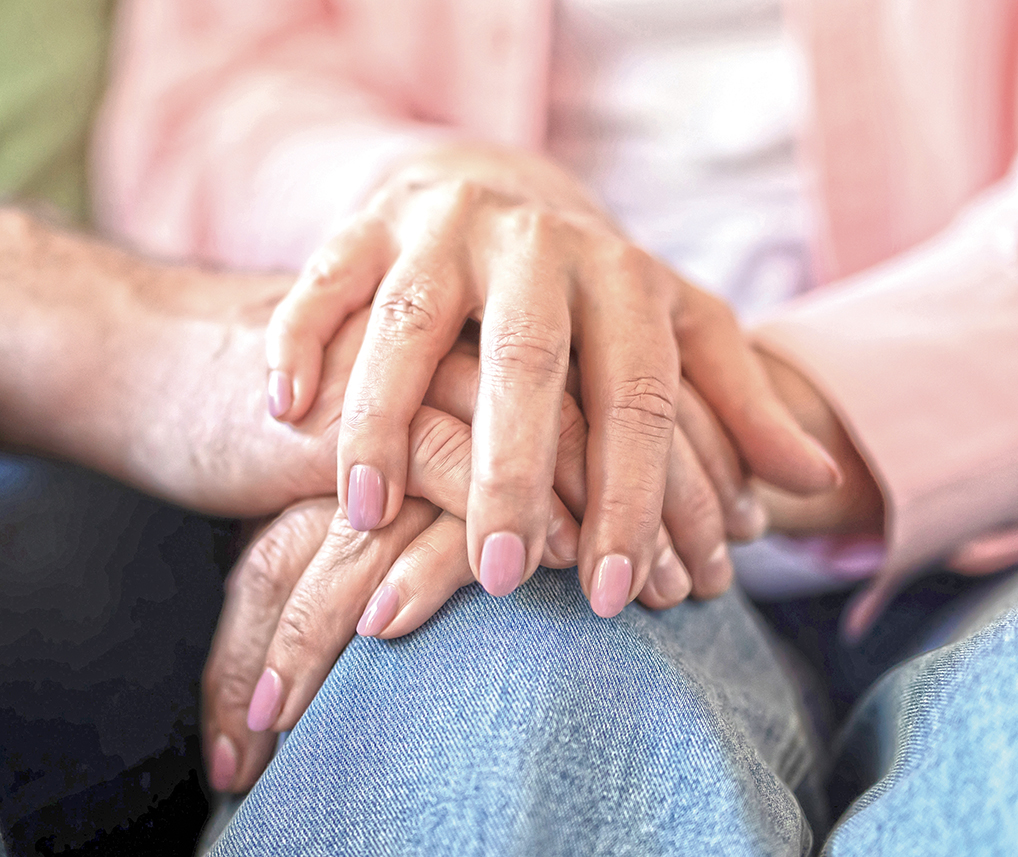
From daily prayer and Torah study to the celebration of Shabbat and holidays, Jewish life is designed to take place within a communal context.
By simply being present in community, we become active participants in mutual healing and support — “Healers, not fixers,” Dr. Rachel Naomi Remen explains. “Curing is (fixing or) eliminating a condition or disease…Healing is a different relationship…The purpose is to find meaning in the moment.”
When asked by Remen about what things help, those experiencing physical or mental challenges most often respond that someone “Listened to me for as long as I needed to talk.” “Talked to me in the same way after my loss as they did before my loss,” “Sat with me.” “Held my hand.”
Remen also shares the importance of talking about what’s important to them, by asking meaningful questions: What’s it been like? What have you learned? What’s been the hardest part? The good part? What did you discover? How has there been an important change?
Remen concludes, “It’s about seeing the human in everyone, and not just the illness.” And it’s about being healers.
The Talmud illustrates this beautifully through the story of Rabbi Yochanan. Though a renowned scholar and healer, Yochanan found himself overwhelmed by physical and emotional distress.
When his colleague, Rabbi Hanina, visited and attempted to offer comfort through theological discourse, he found Yochanan too burdened by pain to engage. Moving beyond words, Rabbi Hanina simply offered his hand. That physical connection lifted Yochanan’s spirits.
When the Talmud questions why such a great healer could not heal himself, it offers a timeless reminder: “A prisoner cannot free himself from prison.”
Literature to share
Jewish Roots of American Liberty: The Impact of Hebraic Ideas on the American Story, edited by Wilfred M. McClay and Stuart Halpern. Are you aware of how the Jewish Bible, thought, and tradition inspired America’s formation and provided the foundations for its identity, from its principles and institutions to its culture? Whether the answer is yes or no, this newly published, highly readable anthology is worth exploring. The joint effort of two renowned history scholars and writers, Jewish Roots includes many notables among its chapter authors including Jonathan Sarna, Ariel Clark Silver, Meir Soloveichik, and Daniel Dreisbach. At the nation’s 250th anniversary, it’s a perfect time to learn more about America’s roots so we can more successfully build toward its future.
On All Other Nights: A Passover Celebration in 14 Stories, edited by Chris Baron, Joshua Levy, and Naomi Milliner. Perhaps the most widely celebrated Jewish ritual, the Passover Seder is the centerpiece of this weeklong Jewish springtime holiday. More than 2,000 years old, the Seder is an interactive, choreographed, 14-step meal filled with rituals, special foods, and songs that retell the biblical Exodus story. A perfect addition to this season is this award-winning anthology aimed at intermediate grades. It’s a collection of 14 short stories in varied genres crafted by popular middle-school authors, each of which reimagines a different step of the Seder while highlighting its themes of freedom, gratitude, joy, and remembrance.
To read the complete March 2026 Dayton Jewish Observer, click here.